A sober, experiential reflection on how subtle bodily sensations revealed a dynamic of radiating and absorbing, eventually leading to an intuitive understanding of what Daoist texts call Embryonic Breathing.
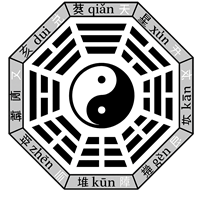
Recognizing the Familiar Sensation
When I first experienced the sensation in my spine, my initial surprise and perplexity gave way to a realization: it was the same sensation I felt in Tantric sex, but manifesting in new locations—a male orgasm, an outward flow. To maintain and enhance it, I had to do the same thing I did with my partner: let it flow, as if something—what one might call Qi—was radiating outward from each node I was exploring.
However, while practicing the Microcosmic Orbit (MCO), I discovered another strategy that seemed more productive. If the goal was to move the sensation with my attention and intention from one node to the next, it seemed logical that the origin node should radiate while the destination node simultaneously absorbed. I knew how to “exhale” or radiate, but how does one make a point on the spine “inhale”?
Negative Pressure and the Logic of “Inhaling” Qi
It seemed to involve creating a kind of vacuum in the receiving node. The most obvious way to achieve this, it seemed to me, was to apply the same intention of creating negative pressure that I used when contracting the perineum—just the intention, since there was no actual muscle to contract there. And it worked.
Interestingly, perineal contraction is a yoga technique I had seen mentioned on forums, the so-called Mula Bandha. Given the results I obtained, it appears precisely designed for this purpose. The irony is that those who championed it as an essential practice were often the same people who rejected physical sensations as a distraction from the noble goal of purely mental meditation. Funny how that works.
A Milestone: Holding Two Points at Once
The truth is, with this strategy I achieved what I later recognized as a major milestone. On one hand, I learned to focus my attention not on a single point, but on two points simultaneously—a key step toward integrating isolated nodes into a unified system. And crucially, I discovered the other polarity, having until then only experienced the radiant, masculine one. The sensation of absorption was as pleasurable as radiating, but directed inward.
This was exactly how my female partners described their orgasms. Moreover, the sensation I felt when absorbing closely resembled the experience of breathing air after a long apnea, or drinking water after a torrid walk. This subtle body was sending me the same signals my physical body uses when receiving something vitally necessary, like air or water. Since it seemed unlikely that my body would betray me by making me perceive something harmful as necessary, I became convinced that this absorption could not be damaging but was, on the contrary, beneficial. This reasoning is not foolproof — the body can mislead — but in this case, sustained practice over years produced no adverse effects, which reinforced my confidence.
Understanding Embryonic Breathing (胎息 Tāixī)
The outcome was the discovery of what Daoist texts call “Embryonic Breathing” (胎息 Tāixī)—breathing Qi in a manner analogous to how we breathe air. This is supposedly what an embryo does in the womb. It implies the concept of something entering (Yin) and leaving (Yang) the organism: we absorb Qi like oxygen and expel something analogous to CO₂, or something we don’t need or is even harmful.
This parallel can lead to misunderstandings. When the texts speak of “breathing,” what is usually understood as pulmonary respiration often refers to this other type of breathing—one less accessible because the initial requirement is the ability to feel (not imagine) the flow of Qi.
Beyond Alternation: When Yin and Yang Merge
And what I discovered much later is that understanding these flows as a breath similar to pulmonary respiration overlooks a crucial detail: there is nothing physical flowing. Therefore, it is possible to “inhale” and “exhale” simultaneously—something impossible in terms of lung breathing but entirely feasible with Qi.
Leave a Reply