Tag: polarity

Yin/yang, absorption/radiation, masculine/feminine

  • The Multiple Levels of Symbolism in My Energetic Practice

    A significant challenge I have encountered in using classical texts as practical guides is their frequent use of the same symbolism to describe distinct processes. The fusion of opposites in energy practice is a particularly compelling example — a concept I have come to interpret in three distinct ways through my own experience.

    First Level: Fusing Attention with Sensation

    The first interpretation involves the fusion of Water and Fire. I understand Water as symbolizing the sensory experience of energy (Qi), while Fire represents the focused application of intention (Yi), which I consider the primary tool of consciousness (Shen). In my practice, the foundational method for refining Qi entails immersing my attention and intention (Yi) into the region where the energy sensation (Qi) is perceived. This fusion progressively intensifies and fluidifies the Qi, which in turn refines the Shen. For me, this creates a virtuous cycle: my consciousness cultivates unwavering attention and precise intention—qualities essential to my energy work.


    Second Level: Spatial Alignment for the Central Channel

    The second fusion of opposites, discovered at a later stage, relates to spatial alignment for activating the central channel. After establishing a basic fusion of Qi and Shen, I began focusing on energy circulation, starting with the well-known Microcosmic Orbit (MCO). Although highly effective for cultivating refined Qi, this practice alone overlooked a crucial element: activation of the central channel (Zhong Mai). Through experience, I realized the importance of simultaneously focusing my attention on opposing points along the Du and Ren Mai meridians, which enabled me to sense the Qi in the central space between them.

    Thus, for me, the “fusion of opposites” in this context means a simultaneous focus on anterior and posterior points. This need to engage opposing pairs shapes my interpretation of the symbolic crisscrossing of Ida and Pingala in Tantric diagrams—not as literal anatomical structures but as procedural guides, here guiding attention to left and right points to activate the Sushumna channelMapping the nodes.


    Third Level: Simultaneous Yin and Yang

    The third and most advanced stage is what I term the operational fusion of Yin and Yang. Through practice, I learned to direct Qi to flow inward—a Yin, absorbing quality—or outward—a Yang, radiating quality. The breakthrough came with the counterintuitive realization that I could command the Qi in a specific node to flow inward and outward simultaneously. Because Qi, in my experience, is a subjective neural-perceptual phenomenon rather than a physical substance, this paradoxical state became attainableYin-Yang fusion. Placing an area into this concurrent Yin/Yang mode felt like the ultimate energetic fusion, directly dissolving this fundamental duality for me and powerfully catalyzing the dissolution of identity at the three Dantians.


    Summary: From Metaphor to Paradox

    In summary, these three cases represent how I have applied the concept of “fusion of opposites” at different levels of my energetic practice. The first case is not a literal fusion; water and fire are metaphors for uniting attention and intention with sensation. The second is a spatial technique, focusing on front and back or left and right simultaneously. But the third points to a genuine fusion of opposing actions—inhaling and exhaling at the same time—which fundamentally challenges our perception of reality. This, in my opinion, is the ultimate goal of the whole practice: to systematically challenge well-established dualities, such as male-female, inside-outside, and self-other, until I confront the ultimate pair of opposites to fuse: being with non-being, self with nothingnessMental states and wishful thinking.

  • Bypassing the Biological BIOS: Basic Instructions for Survival

    In this post, I apply a systems-engineering lens to the human experience, comparing our cultural conditioning to an operating system and our evolutionary instincts to a computer’s BIOS. I explore how specific meditative states act as a way of bypassing the biological BIOS, temporarily suspending the deep-seated directives of sex, space, and self.

    The BIOS: Innate Instructions for Survival

    At the most fundamental level, all living organisms are born with innate instructions that govern survival and reproduction. This is analogous to the BIOS (Basic Input/Output System) in computers, which is pre-installed and essential for basic operation before any other software is loaded.

    In biological terms, these instructions are encoded in DNA and expressed as instincts and reflexes—automatic responses that allow an organism to feed, avoid danger, and reproduce, even without prior experience. The BIOS in machines serves a similar function, providing foundational routines necessary for initialization and basic hardware interaction.

    Like any human being, I received my “operating system” and initial programs as soon as I could process language—from religious conditioning to mathematics—constantly updated by daily experience to dictate behavior, with thoughts as the interface.

    When meditation enabled me to be conscious without thoughts, it felt as though my post-birth operating system and programming had been removed. Yet the BIOS—the deepest layer of survival code—remained.


    Fusion in the Three Dantians: Bypassing My BIOS

    When I experienced the yin–yang fusion in the Dantians, my perception of certain fundamental concepts—concepts I had always taken for granted—changed dramatically.

    In the Lower Dantian (LDT), the duality of male–female “uncollapsed,” merging into a single entity for which the concept of sex was irrelevant.

    In the Middle Dantian (MDT), the uncollapsed dualities related to spatial perception—far and near, in and out. Space, as I had always understood it, lost its meaning.

    In the Upper Dantian (UDT), the duality of me–other dissolved. The sense of an isolated “I” facing an external “Other” gave way to a profound feeling of oneness.


    A Hypothesis: Consciousness and Its Core Directives

    These dualities that were always taken for granted could very well be the basic BIOS directives embedded in a living organism:

    The first directive would likely be the distinction between “you” and “other.” This would be essential if you were a mouse facing a cat, or a human facing a tiger.

    Next, there would be an understanding of three-dimensional space—concepts like near and far, in and out—crucial for navigating the world, finding food or mates, and avoiding predators.

    Finally, there must be an instruction tied to reproduction: the concept of sex, ensuring continuation of the species.

    With these simple directives, any organism—using its particular hardware of sensors and actuators—would have reasonable chances of survival and reproduction.

    Under this hypothesis, being conscious without thoughts was like bypassing my operating system, while the fusion of yin and yang in the three Dantians felt akin to temporarily bypassing these three BIOS directives.

    But one fundamental instruction still remains. To survive, the most basic directive appears to be: “You are.”


    The Final Duality: Being vs. Nonbeing

    So basic is this directive that, even after witnessing the fusion of the opposites—male and female, in and out, me and other—the dualities inherent in “I am” remain stubbornly intact: being vs. not being, Self vs. nothingness.

    How could there be a reality where being and nonbeing are one and the same? How could there be a reality not experienced by “my Self,” the interface that has functioned so well since birth? At this moment, that remains inconceivable to me.

    The final duality of Being versus Non-being remains the last encrypted line of code. Whether it can be bypassed — and what that would even mean — I do not know. Having witnessed the dissolution of other dualities I once considered fundamental, I no longer assume this one is permanent. But I also no longer assume that its dissolution would reveal something “more luminous.” It might simply reveal what remains when all directives have run their course.


  • Simultaneous Yin and Yang: The Counterintuitive Fusion

    In a previous post, I described how the discovery of energetic “breathing” — alternating absorption (Yin) and radiation (Yang) — led to what Daoist texts call Embryonic Breathing. At that stage, the process still appeared sequential. The question became: is simultaneous yin and yang possible?

    The Sensation as Flow

    My energetic practice can be summarized as learning to manage a physical sensation. Initially, this sensation appears as a flow — as if a fluid, seemingly corresponding to what Daoists call qi, were entering or leaving specific areas of the body in a controlled way.

    When this experience first arose spontaneously, it manifested as expansive — yang. Over time, I discovered its complementary polarity: the sensation of inhalation, yin — just as pleasurable as the outward flow, but directed inward. Eventually, however, I came to understand that the aim of the practice was not to alternate the “breathing” of qi between exhalation and inhalation, but to allow both processes to occur simultaneously.


    Can Opposites Coexist?

    The counterintuitive idea of inhaling and exhaling at the same time emerged during Tantric sexual practice, after mastering what I call “flow reversal.” My partner and I alternated roles: for several minutes I would radiate (yang) while she absorbed (yin); then she would radiate while I absorbed. Each reversal intensified the sensation and the associated pleasure. Crucially, it seemed that my intention triggered the shift, and her nervous system responded accordingly — though the exact mechanism of this apparent coordination remains unclear. Observing the sensations associated with each polarity, an inevitable question arose: what would happen if both polarities could be activated simultaneously?

    After all, everything depended on intention. Although the experience felt like a flow, nothing physical was actually moving. If fusion were possible, it would require applying both types of intention — yin and yang — at the same time. The logical place to explore this possibility was the transitional moment, the instant when intention shifted from yin to yang or vice versa.


    The Physics of Transition

    Until then, I had treated the process as mutually exclusive. Yin intention produced absorption; to switch, I would “cut” that intention and, after a brief pause, activate yang. Between them was a neutral gap. But no physical process changes state instantaneously. There is always a decay time as one state fades, and a rise time as another emerges. That observation provided the key.

    By placing attention precisely at the point of transition, I learned to detect the fading of one mode and to initiate the opposite intention before the first had completely dissipated. In that brief overlap, I could perceive — subtly but unmistakably — the simultaneous presence of yin and yang: one decaying, the other arising.

    From there, the process became one of gradually increasing the overlap, strengthening the coexistence of both intentions. What began as a faint superposition evolved into a stable, immersive yin–yang simultaneity.

    Interestingly, this technique closely resembles early instructions found in the Vijñāna Bhairava Tantra. Sutras 24, 25, and 26 describe awareness at the turning points of the breath — or, in Osho’s freer translation, the moment “when in-breath and out-breath fuse.”


    Not Enlightenment — Just a New Phase

    For me, these instructions make limited sense if applied solely to pulmonary respiration. They become technically coherent only when understood in terms of energetic flow — not imagined, but directly felt. Achieving simultaneous yin and yang does not produce instantaneous enlightenment, but it does mark a transition to a more advanced phase of energy management.

    Nothing more — and nothing less.

  • Yin and Yang: Understanding the Mechanics of Embryonic Breathing

    A sober, experiential reflection on how subtle bodily sensations revealed a dynamic of radiating and absorbing, eventually leading to an intuitive understanding of what Daoist texts call Embryonic Breathing.

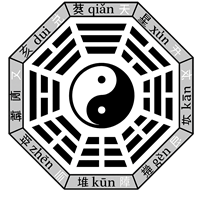
    Yin-yang symbol reflecting how Yin and Yang merge in Embryonic Breathing practice

    Recognizing the Familiar Sensation

    When I first experienced the sensation in my spine, my initial surprise and perplexity gave way to a realization: it was the same sensation I felt in Tantric sex, but manifesting in new locations—a male orgasm, an outward flow. To maintain and enhance it, I had to do the same thing I did with my partner: let it flow, as if something—what one might call Qi—was radiating outward from each node I was exploring.

    However, while practicing the Microcosmic Orbit (MCO), I discovered another strategy that seemed more productive. If the goal was to move the sensation with my attention and intention from one node to the next, it seemed logical that the origin node should radiate while the destination node simultaneously absorbed. I knew how to “exhale” or radiate, but how does one make a point on the spine “inhale”?


    Negative Pressure and the Logic of “Inhaling” Qi

    It seemed to involve creating a kind of vacuum in the receiving node. The most obvious way to achieve this, it seemed to me, was to apply the same intention of creating negative pressure that I used when contracting the perineum—just the intention, since there was no actual muscle to contract there. And it worked.

    Interestingly, perineal contraction is a yoga technique I had seen mentioned on forums, the so-called Mula Bandha. Given the results I obtained, it appears precisely designed for this purpose. The irony is that those who championed it as an essential practice were often the same people who rejected physical sensations as a distraction from the noble goal of purely mental meditation. Funny how that works.


    A Milestone: Holding Two Points at Once

    The truth is, with this strategy I achieved what I later recognized as a major milestone. On one hand, I learned to focus my attention not on a single point, but on two points simultaneously—a key step toward integrating isolated nodes into a unified system. And crucially, I discovered the other polarity, having until then only experienced the radiant, masculine one. The sensation of absorption was as pleasurable as radiating, but directed inward.

    This was exactly how my female partners described their orgasms. Moreover, the sensation I felt when absorbing closely resembled the experience of breathing air after a long apnea, or drinking water after a torrid walk. This subtle body was sending me the same signals my physical body uses when receiving something vitally necessary, like air or water. Since it seemed unlikely that my body would betray me by making me perceive something harmful as necessary, I became convinced that this absorption could not be damaging but was, on the contrary, beneficial. This reasoning is not foolproof — the body can mislead — but in this case, sustained practice over years produced no adverse effects, which reinforced my confidence.


    Understanding Embryonic Breathing (胎息 Tāixī)

    The outcome was the discovery of what Daoist texts call “Embryonic Breathing” (胎息 Tāixī)—breathing Qi in a manner analogous to how we breathe air. This is supposedly what an embryo does in the womb. It implies the concept of something entering (Yin) and leaving (Yang) the organism: we absorb Qi like oxygen and expel something analogous to CO₂, or something we don’t need or is even harmful.

    This parallel can lead to misunderstandings. When the texts speak of “breathing,” what is usually understood as pulmonary respiration often refers to this other type of breathing—one less accessible because the initial requirement is the ability to feel (not imagine) the flow of Qi.


     Beyond Alternation: When Yin and Yang Merge

    And what I discovered much later is that understanding these flows as a breath similar to pulmonary respiration overlooks a crucial detail: there is nothing physical flowing. Therefore, it is possible to “inhale” and “exhale” simultaneously—something impossible in terms of lung breathing but entirely feasible with Qi.


  • Androgynous Consciousness: When Masculine and Feminine Dissolve

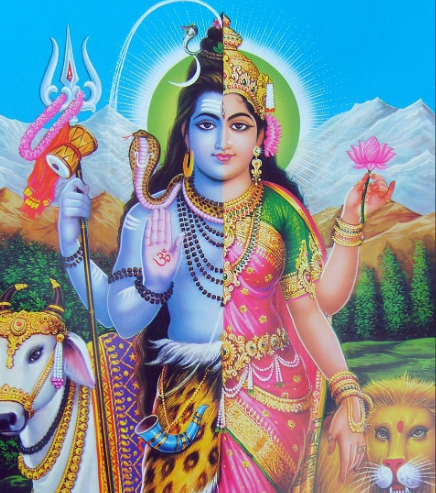
    Ardhanarishvara — the androgynous form of Shiva and Parvati.

    What began as curiosity became transformation. Through intimacy, energy work, and heightened awareness, masculine and feminine dissolved into a single current — revealing what might be called androgynous consciousness: the genderless nature of consciousness itself.

    This account reflects how I understood these experiences at the time. Some interpretations — particularly those concerning “pure consciousness” or the nature of the self — are revisited more cautiously in later posts.

    The Catalyst

    Months after my dakini left, I began a new physical relationship. It did not carry the same depth of love and joy I had experienced with her — but another kind of connection emerged: intense, surprising, and charged with something new.
    Between us, there was a third presence – a catalyst. Cannabis. What followed was not intoxication, but amplification — the body becoming a field of resonance.

    Before I continue, a few clarifications.

    I was in my sixties, and this was the first time I had ever inhaled anything of that nature. I only allowed myself to take this step because the timing was right: my professional life had reached its natural end, retirement was near, and no responsibilities demanded my vigilance.

    I do not encourage the use of any substance, and certainly not for those still engaged in daily obligations. But neither do I believe in forbidding what can, under the right circumstances, open doors of perception. There are always risks — and each person must weigh them with full awareness and responsibility.

    In my case, this plant did not serve as an escape, but as an amplifier. If before the feeling had been like a gentle stream, now it became a current — powerful, unrelenting, sweeping us both into places we had never imagined.

    At first, it seemed a fortunate synergy that simply enriched our time together. But then came a turning point.


    Acknowledgment and Cartography

    The more I explored, the clearer it became that this was no longer just pleasure. It was August 2012 when a peculiar surge rose along my spine. At that moment I understood that the “Tantric thing” we had often joked about was asking for real attention.

    So we continued the practice — hour after hour, day after day. Between encounters, in the quiet intervals, I explored my body alone, discovering how the same sensations grew stronger even without her presence.

    Mapping of perceived energy nodes during the “cartography” phase (2012–2016). Visualization created for documentation purposes.

    It became a phase of inner cartographyMapping the nodes — mapping subtle structures revealed through deepening sensation. Each new pulse illuminated hidden territories within.

    Meanwhile, I wandered the internet — half seeker, half skeptic — searching for echoes of these experiences in Tantric symbols and metaphors. I did not yet know the language, but I recognized the patterns.


    Changes in Perception

    As the sensation evolved, my perception of reality changed as well. The first noticeable shift was a sense of dissolutionOn dissolution and death — as if the boundaries of my body were no longer fixed. The faint openness I had once felt along my spine gradually expanded, as though I were merging with my partner, and through her, with everything around us.

    Following the sensation inward revealed a simple fact: thinking disrupted the experience. The feeling was strong enough to expel thought like an unwanted reflex. Without knowing it, I was practicing some sort of meditation.

    Over time, I spent longer periods fully conscious yet free of thought — until thought itself appeared as something external. That led to a fundamental realization: I was not my thoughtsOn the Self. They were merely automatic brain activity, mechanical and impersonal. What I truly was, was the awareness observing them arise and fade.


    The Reversal

    Then, in the spring of 2015, something shifted. The current that had always flowed from me to her suddenly reversed. It was as if she became the origin, and I, the receiver. Sensation moved in new directions, unfamiliar and astonishing. I received what I had only known how to offer.

    To feel oneself from the other side of the mirror is no small thing.

    At first, it was disorienting. The gender roles I had thought fixed — shaped by habit, culture, identity — dissolved. It stirred questions I had never considered.

    As we talked through it, we found parallels in ancient Tantric texts — especially in the image of the androgynous body. What had once been polarity now became androgyny — not metaphorically, but experientially. A deeper wholeness emerged, as if until then we had only known half of what was possible.


    Androgynous Consciousness – The Body Beyond Gender

    Once the initial cultural shock subsided, it felt not extraordinary but self-evident. This “I” — pure consciousness — existed beyond gender. Sex was a biological function, irrelevant in this context.

    Physically, my partner and I were woman and man. Energetically, we were identical. At first, we exchanged polarities — now one radiating, now the other. Later, we learned to hold both simultaneously: masculine and feminine, yin and yang, fused in a single moment. What remained was unity — a continuous field of awareness perceiving itself through two bodies.

    At a subsequent stage, I found I could reach this fusion aloneFusion.