Tag: technique

Step-by-step procedures: how to do something specific

  • Following the Qi: What Practice Taught That Texts Couldn’t

    Classical texts point the way, but the Qi itself became my real teacher. This post gathers lessons that emerged only through practice — corrections to what I had misunderstood, refinements I couldn’t have anticipated, and frontiers I’m still exploring.

    The Guiding Principle: Let the Qi Lead

    Early on, I approached the practice as a student follows instructions: do this, then that, in this sequence, for this duration. The texts seemed authoritative, and I assumed precision meant fidelity to their letter.

    But something shifted when I stopped trying to direct the Qi and started listening to it instead. I inhaled when the Qi seemed to want to enter; I exhaled when it felt ready to leave. This was not technique — it was attunement.

    During the phase of martial fire, I was still pushing and pulling, trying to make things happen. The correction came naturally: when the Qi began moving on its own, I discovered that the best thing I could do was get out of the way. This was my first taste of civil fire — not doing, but allowing.

    Later, a further refinement emerged. Although civil fire is correct most of the time, there are moments when a small nudge is needed — a brief application of martial fire to set the Qi in motion before stepping back. The interplay between the two became intuitive, no longer a rule to follow but a sensitivity to cultivate.


    Things I Misunderstood at First

    The texts led me down several dead ends before I learned to read them differently.

    Breath synchronization. I initially assumed that Qi breathing should match pulmonary breathing — that each inhale and exhale of air should correspond to a movement of Qi. This proved impossible. The cycles of Qi are far longer than the cycles of breath. Once I recognized this, I stopped paying attention to pulmonary respiration altogether. It became background noise, irrelevant to the real work.

    The Microcosmic Orbit. I thought the sensation should rise from root to crown in a single breath. It doesn’t. The process is far slower — node by node, waiting until the sensation fully establishes itself in one location before moving to the next. Rushing the orbit produced nothing but frustration.

    Literal readings. Some classical instructions, taken literally, lead to dangerous or absurd practices. The doctrine of the Three Treasures, for instance, has inspired practitioners to attempt physical reabsorption of semen using devices. I never went there. The Qi itself taught me to read these texts as metaphor, not manual. When a path felt forced or nonsensical, I trusted sensation over scripture.


    The Physical Setup: Posture, Legs, Hands

    My approach to the body has always been minimal. The goal is to reduce noise so that the subtle signal can emerge.

    Posture. I practice lying on my back, fully relaxed, with no deliberate tension anywhere. Sitting postures, lotus positions, spinal alignments — these may serve other purposes, but for detecting and refining Qi, I found them unnecessary and often counterproductive. Tension is noise; stillness is clarity.

    Legs. There are two basic positions, each producing a different perceptual geometry:

    • Extended: The body feels like a column. Qi enters through the feet and exits through the crown, or vice versa. Alternatively, it feels as though the entire vertical axis is receiving or emitting simultaneously.
    • Crossed: The body feels more like a sphere — a central point surrounded by an increasingly porous periphery, exchanging Qi with a space that no longer feels external.

    Hands. The hands offer more possibilities than the legs. The sensation in the palms seems to extend beyond the fingertips, like a subtle fieldThe five gates. When I place my hands on different parts of my body, this finer sensation mingles with the denser, more viscous sensation inside, helping to soften and integrate it. The hands become tools of internal contact.


    The Nocturnal Practice

    I have not paid attention to diet, fasting, or elaborate preparation. My practice is simple in its logistics.

    It begins around midnight, an hour or so after a light dinner. It lasts between one and two hours. When it ends, I let myself fall directly into sleep, still bathed in the sensation.

    This timing is not accidental. In the current phase — where the once-violent energetic surges have softened into quiet blissOn pleasure as signal — the transition from practice to sleep has become seamless. There is no sharp boundary, only a gradual fading of wakefulness while the sensation continues.

    This has opened a new frontier.


    The Current Frontier: Being and Non-Being

    Each stage of practice has presented a duality to dissolve. Male and female. Inside and outside. Self and other. One by one, these oppositions softened and merged.

    Now I face what may be the final pair: being and non-being. Consciousness and its absence.

    I already cross this threshold every night. The transition from waking awareness to sleep is precisely the passage from being to non-being — or at least, from being conscious to not being conscious.

    So I have begun to pay attention to that edge. I try to detect the exact point where consciousness dissolves into sleep. So far, without much success. The transition seems to elude observation by its very nature: the observer disappears in the act of crossing.

    But this is the work now. Not forcing, not straining — just watching, as closely as I can, the moment when watching itself comes to an end.


    What Partnership Can and Cannot Reach

    The interplay of Yin and Yang between two bodies creates a push-pull dynamic that intensifies Qi enormously. When one partner absorbs and the other radiates, then reverses, the sensation between them builds beyond what either could generate alone.

    But there are three domains where this fusion can occur — corresponding to the three Dantians — and not all partnerships can access all three.

    Lower Dantian (sexuality). This is the most accessible. Physical attraction and arousal are enough to establish the energetic exchange. With my second partner, this is where we reached our peak: the fusion of sexual energy was powerful, and it was here that I first experienced the reversal of flow and the simultaneous Yin-Yang state.

    Middle Dantian (love). This requires more than physical connection. It requires unconditional affection — care that asks for nothing, presence that holds without grasping. My second partnership did not reach this level. What we shared was sexual, not loving in the deeper sense. The heart remained closed to fusion.

    Upper Dantian (joy, shared intention). This is the rarest. It requires not only love but alignment of purpose — two people who genuinely want the same thing, whose intentions resonate rather than merely coexist. I touched this only with my first partnerWhere it all began, though neither of us understood what was happening at the time. We had love, and we had some alignment of spirit, but we lacked the energetic skill to work with it consciously.

    The ideal would be to find a partner with whom all three levels could be engaged: sexual polarity, unconditional love, and shared intention. I imagine such a connection would be extraordinary. I also imagine it is rare — and perhaps not necessary. The path continues, with or without a partner. The Qi still leads.
     

  • The Multiple Levels of Symbolism in My Energetic Practice

    A significant challenge I have encountered in using classical texts as practical guides is their frequent use of the same symbolism to describe distinct processes. The fusion of opposites in energy practice is a particularly compelling example — a concept I have come to interpret in three distinct ways through my own experience.

    First Level: Fusing Attention with Sensation

    The first interpretation involves the fusion of Water and Fire. I understand Water as symbolizing the sensory experience of energy (Qi), while Fire represents the focused application of intention (Yi), which I consider the primary tool of consciousness (Shen). In my practice, the foundational method for refining Qi entails immersing my attention and intention (Yi) into the region where the energy sensation (Qi) is perceived. This fusion progressively intensifies and fluidifies the Qi, which in turn refines the Shen. For me, this creates a virtuous cycle: my consciousness cultivates unwavering attention and precise intention—qualities essential to my energy work.


    Second Level: Spatial Alignment for the Central Channel

    The second fusion of opposites, discovered at a later stage, relates to spatial alignment for activating the central channel. After establishing a basic fusion of Qi and Shen, I began focusing on energy circulation, starting with the well-known Microcosmic Orbit (MCO). Although highly effective for cultivating refined Qi, this practice alone overlooked a crucial element: activation of the central channel (Zhong Mai). Through experience, I realized the importance of simultaneously focusing my attention on opposing points along the Du and Ren Mai meridians, which enabled me to sense the Qi in the central space between them.

    Thus, for me, the “fusion of opposites” in this context means a simultaneous focus on anterior and posterior points. This need to engage opposing pairs shapes my interpretation of the symbolic crisscrossing of Ida and Pingala in Tantric diagrams—not as literal anatomical structures but as procedural guides, here guiding attention to left and right points to activate the Sushumna channelMapping the nodes.


    Third Level: Simultaneous Yin and Yang

    The third and most advanced stage is what I term the operational fusion of Yin and Yang. Through practice, I learned to direct Qi to flow inward—a Yin, absorbing quality—or outward—a Yang, radiating quality. The breakthrough came with the counterintuitive realization that I could command the Qi in a specific node to flow inward and outward simultaneously. Because Qi, in my experience, is a subjective neural-perceptual phenomenon rather than a physical substance, this paradoxical state became attainableYin-Yang fusion. Placing an area into this concurrent Yin/Yang mode felt like the ultimate energetic fusion, directly dissolving this fundamental duality for me and powerfully catalyzing the dissolution of identity at the three Dantians.


    Summary: From Metaphor to Paradox

    In summary, these three cases represent how I have applied the concept of “fusion of opposites” at different levels of my energetic practice. The first case is not a literal fusion; water and fire are metaphors for uniting attention and intention with sensation. The second is a spatial technique, focusing on front and back or left and right simultaneously. But the third points to a genuine fusion of opposing actions—inhaling and exhaling at the same time—which fundamentally challenges our perception of reality. This, in my opinion, is the ultimate goal of the whole practice: to systematically challenge well-established dualities, such as male-female, inside-outside, and self-other, until I confront the ultimate pair of opposites to fuse: being with non-being, self with nothingnessMental states and wishful thinking.

  • The Tongue in Neidan

    The role of the tongue in neidan is one of those instructions I followed without question — until experience made me reconsider. Classical texts describe it as a bridge connecting two main channels, essential for circulating energy. But is it really necessary? And might it sometimes obstruct rather than help? This post examines both functions of the tongue — as supposed connector and as problematic attractor — and what I’ve found actually works.


    The Tongue as Connector

    When I first started reading about the microcosmic orbit, the instructions were precise: to circulate the sensation, you had to close a gap that supposedly separates the Du Mai from the Ren Mai, namely the mouth. To do so, you placed the tip of the tongue against the upper gums, thereby connecting the Du Mai—which supposedly rises from the perineum up the back to the head and then descends through the head to the upper gums—with the Ren Mai, which rises along the front and ends at the base of the tongue. I followed the instruction, and the sensation did indeed propagate. But as the practice advanced, I began to question what was actually true about this procedure.

    On one hand, I had the experience from tantric sex of “making a connection” when the glans touched my partner’s cervix: both of us experienced a clear increase in the intensity of the flow between us, in both directions. It was as if our nervous systems were communicating without synapses, simply through physical contact. This seemed to support the idea that something similar happened when the tongue touched the gums. However, this is a different kind of phenomenon and deserves its own treatment: what occurs between two people in intimate physical contact is intersubjective—both partners observe and confirm the intensification—and involves coupling between two distinct nervous systems. It is not the same as the internal flow of a single practitioner moving sensation within their own body, which is the case of the lingual bridge.

    On the other hand, my experience in solo practice was that the sensation could be generated in nodes that had no other previously activated node nearby—as when I first perceived it at the prominent vertebra, aligned with vishuddha, before the posterior nodes of anahata and manipura 2 had been activated. In practical terms, what counts is attention and intention. Qi goes where attention goes, as the classical texts repeat, without needing to follow a specific route.

    Ultimately, the goal is to train the nervous system to generate the sensation at will in any part of the body, with no blind spots. And the best technique to ensure no zone is left untrained is the orbits. Once the entire path has received sufficient training, it becomes possible to “move” the sensation along any route through attention and intention, and it appears as if something were circulating along it. But it is also possible to put a whole route into yin or yang mode, so that its full length absorbs or emits, with no apparent circulation.

    For all these reasons, at my current point I no longer use the tongue to make a connection that I now consider doubtful. Instead, I let the entire circuit activate, including the two nodes I discovered later—at the base of the tongue and at the chin—which I had never trained before, presumably because I had been focused on the supposed circulation through the tongue.


    The Tongue as Attractor

    The tongue is a heavily innervated region, and I assume this is why it requires more intensive training. What I have observed is that even when the sensation flows fairly freely throughout the rest of the body, the tongue still appears as a constriction: the sensation there does not flow, it feels like pressure. The same happens with another nearby region, segment 13, which contains a high amount of bone tissue (upper jaw, cheekbones, base of the skull). This “thirst” of certain zones makes them tend to absorb instinctively, which does not benefit the practice when what is needed is to apply civil fire—letting the sensation move on its own, observing without acting—rather than martial fire, that is, trying to push or pull it.

    In phases when the sensation already diffuses fairly fluidly throughout the body, that whole area—segments 12 and 13—becomes problematic for this reason. And one thing that aggravates the problem is the position of the tongue. The point is not to bridge it against the gums, but to keep it floating, without touching the sides, which would close off the inner space of the mouth. That creates a vacuum between the tongue and the palate, which the sensation interprets (correctly) as an attempt to force the area into yin mode by brute strength—the opposite of what should be done, which is to apply civil fire only. As a consequence, the sensation of pressure increases instead of diminishing.

  • Simultaneous Yin and Yang: The Counterintuitive Fusion

    In a previous post, I described how the discovery of energetic “breathing” — alternating absorption (Yin) and radiation (Yang) — led to what Daoist texts call Embryonic Breathing. At that stage, the process still appeared sequential. The question became: is simultaneous yin and yang possible?

    The Sensation as Flow

    My energetic practice can be summarized as learning to manage a physical sensation. Initially, this sensation appears as a flow — as if a fluid, seemingly corresponding to what Daoists call qi, were entering or leaving specific areas of the body in a controlled way.

    When this experience first arose spontaneously, it manifested as expansive — yang. Over time, I discovered its complementary polarity: the sensation of inhalation, yin — just as pleasurable as the outward flow, but directed inward. Eventually, however, I came to understand that the aim of the practice was not to alternate the “breathing” of qi between exhalation and inhalation, but to allow both processes to occur simultaneously.


    Can Opposites Coexist?

    The counterintuitive idea of inhaling and exhaling at the same time emerged during Tantric sexual practice, after mastering what I call “flow reversal.” My partner and I alternated roles: for several minutes I would radiate (yang) while she absorbed (yin); then she would radiate while I absorbed. Each reversal intensified the sensation and the associated pleasure. Crucially, it seemed that my intention triggered the shift, and her nervous system responded accordingly — though the exact mechanism of this apparent coordination remains unclear. Observing the sensations associated with each polarity, an inevitable question arose: what would happen if both polarities could be activated simultaneously?

    After all, everything depended on intention. Although the experience felt like a flow, nothing physical was actually moving. If fusion were possible, it would require applying both types of intention — yin and yang — at the same time. The logical place to explore this possibility was the transitional moment, the instant when intention shifted from yin to yang or vice versa.


    The Physics of Transition

    Until then, I had treated the process as mutually exclusive. Yin intention produced absorption; to switch, I would “cut” that intention and, after a brief pause, activate yang. Between them was a neutral gap. But no physical process changes state instantaneously. There is always a decay time as one state fades, and a rise time as another emerges. That observation provided the key.

    By placing attention precisely at the point of transition, I learned to detect the fading of one mode and to initiate the opposite intention before the first had completely dissipated. In that brief overlap, I could perceive — subtly but unmistakably — the simultaneous presence of yin and yang: one decaying, the other arising.

    From there, the process became one of gradually increasing the overlap, strengthening the coexistence of both intentions. What began as a faint superposition evolved into a stable, immersive yin–yang simultaneity.

    Interestingly, this technique closely resembles early instructions found in the Vijñāna Bhairava Tantra. Sutras 24, 25, and 26 describe awareness at the turning points of the breath — or, in Osho’s freer translation, the moment “when in-breath and out-breath fuse.”


    Not Enlightenment — Just a New Phase

    For me, these instructions make limited sense if applied solely to pulmonary respiration. They become technically coherent only when understood in terms of energetic flow — not imagined, but directly felt. Achieving simultaneous yin and yang does not produce instantaneous enlightenment, but it does mark a transition to a more advanced phase of energy management.

    Nothing more — and nothing less.

  • Imagery as Energetic Interface: Visualization Without Belief

    After the internal architecture of sensation dissolved into a more permeable, field-like structure, new forms of practice became possible. This post documents one such experiment. What Tibetan traditions would call a yidam entered my practice not as an object of devotion or visualization, but as the use of imagery as an energetic interface—an imaginal scaffold that allowed overwhelming energetic dynamics to integrate coherently.

    The Initial Skepticism

    When I first encountered the concept of a yidam, I understood it as a visualization practice—imagining something until it eventually became experiential. This clashed with my perspective on several levels.

    First, I was already experiencing extraordinarily intense sensations through my Tantric sex practice. Why imagine something when I had direct access to the experience itself? Second, my own observation was that mental activity tended to suppress sensation; so deliberately engaging the mind—after having learned to quiet it—felt like a step backward. Third, my stubborn atheism made “deity worship” unthinkable. The practice seemed entirely out of reach.

    Then came a pivot point. A respected friend on a forum offered a technical clarification:

    “True deity practices are not about visualizing an imaginary being, but actually connecting to one. The energy of the being manifests in your local mind-space. Any images or visions arise naturally as the mind gives form to overwhelming energetic flows.”

    This description of “connection” resonated immediately. In 2017, with my partner-based practice on hold, I decided to experiment by using imagery to bridge the gap. I focused on one stand-out principle: “Your own essence and the deity’s essence are indivisible.”


    The Fusion Protocol

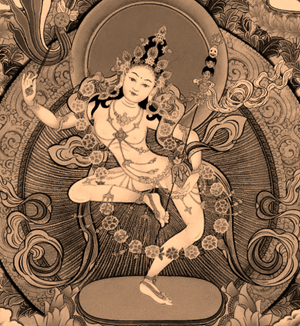
    So I decided to experiment with fusion using the figure of a goddess. I did not place her on a pedestal to worship her. Instead, I approached the exercise as an operational test: could I reproduce, internally, the same kind of fusion I had previously experienced in Tantric sex — the only phenomenological framework I truly understood?

    The effects were immediate and intense. The familiar yin–yang dynamics I had experienced with my human partner re-emerged with remarkable clarity. However, the usual sense of bodily separation began to dissolve. Rather than two distinct bodies interacting, there was a shared experiential field: I felt her within my perceptual space, and myself within hers.

    Visualization soon became unstable. When attention shifted toward the expansive, outward (yang) component, she appeared distinctly external — clearly “out there.” Yet the simultaneous presence of the contractive, inward (yin) component inverted the frame of reference, as if the experience were unfolding from within her perspective. The conventional distinction between inside and outside gradually lost structural coherence.

    This led to a significant realization. The “feminine” sensations I had previously attributed to my partner were not imported from outside. They were accessible within my own system. No external proxy was required to enter that androgynous configuration.


    From Sex to Love to Joy

    As in Tantric practice, the fusion was initially strongest from the diaphragm downward — what internal alchemy traditions call the Lower Dantian. The next step was deliberate: extend the fusion upward, toward the heart.

    If the lower register operates at the frequency of sex, the heart operates at the frequency of love. Not domesticated affection, not attachment, but something less conditioned. I attempted to isolate the pure “signal” of love, abstracted from any specific person, narrative, or memory. Stripped of biography, what remained was a quality — an open, non-defensive warmth without an object.

    When attention stabilized on that signal, a powerful wave propagated through the chest. The experience was intense, almost overwhelming — a systemic surge rather than a localized sensation. The two presences no longer felt like interacting bodies, but like differentiated aspects within a single energetic configuration. If I saw her as a goddess, one might call it prayer. Operationally, it was resonance.

    Weeks later, however, a structural asymmetry remained. From the heart downward the fusion felt coherent, but above that level it resembled a single organism with two cognitive centers. The question became almost technical: what human analogue corresponds to fusion at the level of the head?

    The answer emerged through the eyes. In the inner representation, her eyes were the only sharply defined feature. In a brief, almost magical shift, I perceived a spark of joy there. The reaction was immediate: a powerful surge entered through my own visual field and flooded the head — not as sexuality, not as love, but as unfiltered joy.

    The key realization was simple and destabilizing at once: her joy and my joy were not two events in exchange. They felt like the same event, perceived from different reference points. This shared joy was the missing parameter.


    The Scaffold

    I still wonder what truly happened. Against my own convictions, I undeniably perceived those eyes — as if something external were addressing me. The experience carried a persuasive realism that remains difficult to dismiss.

    My working hypothesis remains conservative: this was likely a biological interface through which the nervous system metabolized intensity. Regardless of its ontological status, the temporary assumption of duality — myself and the goddess — proved operationally effective. Using imagery as an energetic interface functioned as a scaffold, a provisional structure that allowed the system to stabilize and reorganize under conditions of high charge. Once integration was achieved, the scaffold was no longer necessary.

    Years later, that dual framing dissolved on its own. There was no goddess and no separate self, only a unified process without internal division — at least at the level of experience. But that development belongs to another discussion.

  • The Rules Change: From Forceful Intention to Effortless Awareness

    Eventually, a threshold is crossed where the most profound skill is the transition to effortless awareness—learning when to stop driving and become a passenger as the energy becomes self-sustaining.

    Where Attention Goes, Qi Flows

    For years, the core of my practice was a simple, powerful rule: where attention goes, Qi flows. My conscious mind (Shen) was the driver, and my intent was the fuel. This active guidance—what the classics call Martial Fire (武火, Wǔ Huǒ)—is essential for building the foundation. It’s how I ‘lit the boiler’ and ‘laid the tracks.’

    But then, something shifts. The pressure builds. The flow becomes self-sustaining. At that point, the most profound skill is knowing when to stop driving and become a passenger. This is the transition to Civil Fire (文火, Wén Huǒ), where Qi begins to guide Shen.

    This principle is summarized by the Neidan maxim:

    ‘始则汞投铅,终则铅投汞’
    This can be translated as: “First, Mercury is cast into Lead; later, Lead is cast into Mercury.”

    Here, Mercury represents the swift, mobile attention of Shen, which can move like quicksilver to any area of the body. Lead represents the denser, more substantial Qi. In the early stages, attention (Mercury) is directed to a specific area to attract and guide the energy (Lead). But later, the roles reverse: the Qi moves on its own, and awareness simply follows it to the areas where it is stirring.


    The Phase of Martial Fire: Shen Guides Qi

    The Tool: Forceful, directed intention. I am the architect and the laborer, building the circuit piece by piece.

    The Goal: To break through blockages, ignite circulation, and accumulate a critical mass of refined Qi—or, in neurobiological terms, to train the neural pathways that generate the sensation of Qi.

    The Feeling: Effort, focus, specific sensations at specific points. It’s like pumping water uphill.


    The Tipping Point: The System Ignites

    This is the moment my practice “came alive.” The refined Qi reaches a critical density—or, expressed neurologically, the neural pathways achieve a self-sustaining level of activation—where it no longer needs to be pushed. It begins to move on its own, like a pressurized fluid seeking the path of least resistance through the body. I first perceived this after three years of unwittingly practicing a form of Tantric sex, when a sensation spontaneously crawled up my spine—an experience some traditions refer to as “spontaneous kundalini.” The sensation then evolves from a localized stream into a pervasive, full-body hum or flow after years of patient practice.


    The Phase of Civil Fire: Qi Guides Shen

    The Tool: Effortless awareness; “listening” instead of “commanding.” My role is to get out of the way, to provide a calm, stable “container” for the process.

    The Goal: To allow the Qi to purify, integrate, and illuminate the entire system without the interference of the ego-mind.

    The Feeling: Spontaneous movements, waves of energy, a sense of being moved rather than moving. The mind becomes quiet, carried by the flow of Qi.


    The signals of the body

    Trying to pull when it was not necessary felt like trying to suck a viscous liquid through a flexible straw, the walls just collapsed and blocked the flow. But even when using civil fire there was a warning. Qi rushed in or out on its own, but when there was a big surge in the flow the body reacted with a kind of hiccup, a contraction that stopped it, as if saying that it was too much or too early. I took this signal as a confirmation that I was on the right track, but I had to be a bit less impatient.

    In later stages I found a strange signal, this time it seemed not a warning but an acknowledgement. At that time, the task consisted in letting the energy flow from all directions, permeating wider and wider areas. The feeling of progress was the extension of perception covering a wider area, feeling it as a single entity, and/or the increase of smoothness of the flow, from air to ether. Then, with a remarkable correlation, a drop of fluid fell from the palate to my mouth. The Buddhist concept of amrita came to my mind, but as I understood it, it was supposed to be a kind of magic elixir that enhanced the flow or something like that, but this was not the case, as the enhancement came before and the drop fell after. Whether this was saliva released by deep relaxation, some glandular secretion, or something else entirely, I cannot say. What mattered was the consistent correlation with perceived progress.

    Anyway, I took this again as a confirmation that I was on the right track.


    The Overlap: Wielding Both Fires

    The journey isn’t a linear ladder but a dynamic dance. Even after entering the phase of Civil Fire, I still encounter new, under-trained areas. The rules don’t change forever; I just gain more tools: I use Martial Fire to target a newly discovered, resistant node (like the ones I found in my neck), and Civil Fire to allow the now-smoothed flow to permeate the entire system and reconnect.

    I become a skilled artisan, knowing when to use the hammer and when to use the brush. The ultimate goal is to fluidly transition between them, allowing the system’s own needs to dictate the method.

    The greatest shift in my practice was not learning a new technique, but learning a new relationship with the energy itself—from being a master who commands to a steward who cooperates. I found this necessity when Qi gained momentum and I saw that my initial, directive approach had become counterproductive. If I felt Qi wanted to move inward and I willed an absorption, or outward and I willed an expulsion, that very intention seemed to block the flow, creating pressure. I discovered that the best thing to do was often… nothing. Just watch.


    Wuwei: Not Just Doing Nothing

    This seems to be the essential message of the Daoist concept Wuwei (无为 – “Effortless Action”), as opposed to Youwei (有为 – “Deliberate Action”). I discovered this concept before I encountered the terms for Civil and Martial Fire, and it points to the same truth.

    At first, I thought, “Fantastic! Now I just sit back and do nothing.” But this was far from reality. My previous practice of guiding Qi with intention—absorbing or radiating, but without conscious thought—had trained my body to react instinctively. While this was a necessary stage, the result was that my body now automatically tried to do something, creating blockages. So, for me, this “doing nothing” became a struggle to tame my body’s own instinctive, trained reactions.

    My new, “active” intention was not to command the Qi, but to maintain an unwavering attention on the areas where it surged and to simply yield, yield, yield.

    This transition to effortless awareness is not an irreversible state. The real art is knowing when to strive and when to simply allow.

    Emblem XLII — Atalanta Fugiens, Michael Maier (1618). ‘Let Nature be your guide.’


  • Integration of Nodes: From Points to Lines and Segments

    Early practice taught me how to evoke a sensation at a single point. What followed was a more complex process: the integration of nodes into lines and eventually segment-based structures—a shift that reshaped how I understood attention and polarity.

    Learning to Activate a Single Point

    Learning to apply the right intention and focused attention to a single point, making the sensation arise, was the essential first step. But I soon realized this was far from sufficient.

    With practice, I could feel the sensation at one point and then “move” it to the next simply by shifting my attention. However, as soon as my focus left the first point, the sensation there would vanish. I could only ever feel one active node at a time.

    It felt like learning to flex a single, isolated muscle while the rest of the body remained inert. If this were the limit of the practice, I began to wonder whether the entire endeavor was worthwhile. The sensation itself was profound, but this fragmented perception felt incomplete.


    From Points to Polarity: The First Breakthrough

    My first systematic exploration focused on the Microcosmic Orbit. Initially, I simply passed my attention from node to node along the Du Mai, watching the sensation bloom and then fade behind me like a light being switched on and off.

    The breakthrough came with the idea of making one node exhale (radiate, yang) while the next inhaled (absorbed, yin). This not only revealed the second polarity of the sensation but also showed me that I could focus on two points simultaneously and make them interact.

    Still, managing two points felt like a rudimentary skill. I suspected that the real challenge was to feel the entire length of the Du Mai at once, from tailbone to crown—to perceive the line, not just the dots.


    Neural Inertia and the Spinning Plates Analogy

    To explore this, I devised a simple technique: rapid, rhythmic shifting of attention. Starting at the tailbone, I would move to the sacrum. The sensation at the tailbone faded, but not completely. Moving next to the Ming Men, the sacrum dimmed, yet a faint echo remained.

    Crucially, when I cycled my attention back to the tailbone, I found it was not starting from zero. A residual hum of activity persisted—a kind of neural afterglow that required only a moment of focused attention to reignite fully. The same was true for each point in the sequence.

    At least phenomenologically, I had discovered that neural activation seemed to have inertia. It didn’t vanish the instant attention moved elsewhere; it decayed gradually, like a spinning top losing speed.

    The process became analogous to a circus act involving spinning plates. One plate is set spinning, then the next, and the performer must keep returning to each before it falls. By cycling my attention rapidly among multiple points—returning to each before its “spin” fully decayed—I learned to sustain the sensation in three, then four, then many nodes at once.

    Gradually, the individual points began to blend. The discrete flashes of sensation merged into a continuous, humming line of awareness. I was no longer jumping from point to point; I was holding the entire channel in a sustained, coherent state of activation.


    Lateral Integration in the Macrocosmic Orbit

    This process unfolded over extended practice and overlapped with my exploration of the Macrocosmic Orbit. Here, the configuration was different: multiple vertical lines instead of one. There was not a single line to explore in the front and back, as happened in the MCO, now the lines came in pairs, with bilateral symmetry, so I adopted a different strategy.

    Rather than focusing on a single vertical channel, I worked laterally. I would activate a point on the left side until it gained intensity, then shift my attention to the corresponding point on the right until the sensation matched. By oscillating attention rhythmically between the two, I learned to sustain both simultaneously.

    This revealed a synergy that my earlier practice had not. Activating opposing lateral nodes generated a powerful, distinct sensation in the midline of the body—a feeling I could never access by working with vertical channels in isolation.


    The Emergence of a Central Axis

    In the torso, this effect was particularly striking. The structure that emerged—two lateral lines with a stronger central sensation arising between them—vividly reminded me of the yogic triad of Ida, Pingala, and Sushumna.

    My simple technique of shifting attention from left to right seemed to capture the functional essence behind the symbolic crisscrossing of Ida and Pingala in traditional diagrams, a feature that had puzzled me for a long time.

    The next experiment followed naturally. I applied the same principle to the original vertical pair: the Du Mai (back) and the Ren Mai (front). Focusing simultaneously on opposing nodes along these channels produced the same kind of synergistic effect. The central sensation that emerged closely resembled what Daoist texts describe as the Chong Mai, or Thrusting Channel.

    Du Mai, Ren Mai and the emergence of Chong Mai
    Du Mai alone — Ren Mai dormant.
    Nothing else activates.
    Ren Mai alone — Du Mai dormant.
    Same result: nothing else activates.
    Du Mai and Ren Mai together — the Chong Mai activates at the centre.

    In that moment, the two systems—Ida–Pingala–Sushumna and Du Mai–Ren Mai–Chong Mai—appeared less like separate maps and more like complementary descriptions of the same underlying mechanism: what felt like the generation of a central axis through the balanced activation of opposites.


    From Lines to Segments

    This realization opened a new line of inquiry. My torso map did not consist of four vertical lines, but eight. Having observed the effects of activating just two opposing points, the next question became unavoidable: what would happen if all eight points at a single horizontal level could be activated simultaneously?

    If all components were present, there had to be a way for them to function as a unified whole. The linear structure of channels was compelling, but this emerging segment-based organization—achieved through the integration of isolated nodes—seemed far more powerful. That realization marked the transition to the next phase of exploration.


  • Cartography: Mapping Energy Nodes of the Macrocosmic Orbit

    After tracing the Microcosmic Orbit, I began mapping energy nodes along the broader network of lines. What started as a simple extension of attention soon revealed a far more complex geometry, with multiple nodes forming rings around the body. This is a personal account of how I had to redraw the traditional maps to fit my experience.

    Choosing the Focus Points in Arms and Legs

    Once the Macrocosmic Orbit opened, I used the same approach that worked with the Microcosmic Orbit: moving my attention along the lines and mapping the energy nodes where the sensation naturally strengthened.

    The choice of focus points was straightforward in the head and torso. I used nodes at the same heights as those in the Microcosmic Orbit. Now, instead of two nodes at each level, there were eight.

    I had no references for where to focus my attention in the arms, so I chose levels that roughly corresponded to those in the torso: Shoulders aligned with Vishuddha, mid–upper arms with Anahata, elbows with Manipura 2 (diaphragm), mid–forearms with Manipura 1 (navel), wrists with Swadhisthana and fingers with Muladhara. For the legs, I chose similar locations: where they join the torso, mid-thighs, knees, mid-calves, ankles, and toes.


    A System of Rings Instead of Single Chakras

    Overall, this created a system of 15 distinct levels from toes to crown. I would consider each level a genuine “chakra,” with the crucial difference that it wasn’t a single node at the spine, as described in many Buddhist texts, but a ring of eight nodes (or even sixteen from perineum to shoulders, if including the arm nodes).

    The interactive figure shows the approximate location of each node: Du Mai and Ren Mai in yellow, the lateral nodes in blue, the front-left and front-right nodes in green, and the back-left and back-right nodes in red.

    Naturally, this map reflects my own estimation of where to place attention along the pathways that revealed themselves when the Macrocosmic Orbit opened. It worked for me, but other approaches might have led to similar results. With hindsight, and considering how the sensation evolved, I would say that moving attention—and therefore the sensation—from one point to another is not a ritual in which order or exact location are crucial. The principle behind the orbit is simply to cultivate the sensation systematically — perhaps by training relevant neural circuitry — so it can spread throughout the whole body

    Orbits are highly efficient because they train each region in turn, reducing the risk of leaving blind spots that later appear as obstructions when the energy attempts to permeate the entire body.


    The Role of the Tongue

    Furthermore, the Ren Mai had two branches: one at the tongue and one at the penis. I had read in several Daoist texts that the Du Mai runs up from the tailbone to the head and down to the base of the nose, while the Ren Mai ends at the base of the tongue. These texts instruct the practitioner to place the tip of the tongue against the upper gums or soft palate to “close the circuit,” supposedly interrupted by the mouth.

    In practice, however, once I discovered the two uncharted nodes in this area, the sensation moved freely through the chin. Therefore, I did not use the tongue bridge and instead understood the Du Mai as running from the tailbone to the upper back of the head, and the Ren Mai from the upper front of the head to the perineum, including the two branches.

    This is not to say the tongue is irrelevant—it required careful attention at a later stage Tongue as connector and atractor.


    The Map and the Territory

    This map is not a prescription. It reflects one practitioner’s attempt to navigate a territory that resists standardization. What mattered was not the exact location of each node, but the gradual emergence of a system — one that trained the neural circuitry until the sensation could spread freely, without gaps or obstructions. The geometry of rings was a scaffold, not a destination.


  • Yin and Yang: Understanding the Mechanics of Embryonic Breathing

    A sober, experiential reflection on how subtle bodily sensations revealed a dynamic of radiating and absorbing, eventually leading to an intuitive understanding of what Daoist texts call Embryonic Breathing.

    Yin-yang symbol reflecting how Yin and Yang merge in Embryonic Breathing practice

    Recognizing the Familiar Sensation

    When I first experienced the sensation in my spine, my initial surprise and perplexity gave way to a realization: it was the same sensation I felt in Tantric sex, but manifesting in new locations—a male orgasm, an outward flow. To maintain and enhance it, I had to do the same thing I did with my partner: let it flow, as if something—what one might call Qi—was radiating outward from each node I was exploring.

    However, while practicing the Microcosmic Orbit (MCO), I discovered another strategy that seemed more productive. If the goal was to move the sensation with my attention and intention from one node to the next, it seemed logical that the origin node should radiate while the destination node simultaneously absorbed. I knew how to “exhale” or radiate, but how does one make a point on the spine “inhale”?


    Negative Pressure and the Logic of “Inhaling” Qi

    It seemed to involve creating a kind of vacuum in the receiving node. The most obvious way to achieve this, it seemed to me, was to apply the same intention of creating negative pressure that I used when contracting the perineum—just the intention, since there was no actual muscle to contract there. And it worked.

    Interestingly, perineal contraction is a yoga technique I had seen mentioned on forums, the so-called Mula Bandha. Given the results I obtained, it appears precisely designed for this purpose. The irony is that those who championed it as an essential practice were often the same people who rejected physical sensations as a distraction from the noble goal of purely mental meditation. Funny how that works.


    A Milestone: Holding Two Points at Once

    The truth is, with this strategy I achieved what I later recognized as a major milestone. On one hand, I learned to focus my attention not on a single point, but on two points simultaneously—a key step toward integrating isolated nodes into a unified system. And crucially, I discovered the other polarity, having until then only experienced the radiant, masculine one. The sensation of absorption was as pleasurable as radiating, but directed inward.

    This was exactly how my female partners described their orgasms. Moreover, the sensation I felt when absorbing closely resembled the experience of breathing air after a long apnea, or drinking water after a torrid walk. This subtle body was sending me the same signals my physical body uses when receiving something vitally necessary, like air or water. Since it seemed unlikely that my body would betray me by making me perceive something harmful as necessary, I became convinced that this absorption could not be damaging but was, on the contrary, beneficial. This reasoning is not foolproof — the body can mislead — but in this case, sustained practice over years produced no adverse effects, which reinforced my confidence.


    Understanding Embryonic Breathing (胎息 Tāixī)

    The outcome was the discovery of what Daoist texts call “Embryonic Breathing” (胎息 Tāixī)—breathing Qi in a manner analogous to how we breathe air. This is supposedly what an embryo does in the womb. It implies the concept of something entering (Yin) and leaving (Yang) the organism: we absorb Qi like oxygen and expel something analogous to CO₂, or something we don’t need or is even harmful.

    This parallel can lead to misunderstandings. When the texts speak of “breathing,” what is usually understood as pulmonary respiration often refers to this other type of breathing—one less accessible because the initial requirement is the ability to feel (not imagine) the flow of Qi.


     Beyond Alternation: When Yin and Yang Merge

    And what I discovered much later is that understanding these flows as a breath similar to pulmonary respiration overlooks a crucial detail: there is nothing physical flowing. Therefore, it is possible to “inhale” and “exhale” simultaneously—something impossible in terms of lung breathing but entirely feasible with Qi.


  • The Macrocosmic Orbit

    After completing the Microcosmic Orbit, I began searching for signs of a broader circulation—the Macrocosmic Orbit described in Daoist alchemy. This post documents how that expansion unfolded through direct experience, moving from controlled loops to spontaneous activation.

    From Microcosmic to Macrocosmic: The Question of Full-Body Flow

    The Microcosmic Orbit was a highly efficient tool for building a critical mass of Qi. Yet for a long time, I could feel its flow clearly only along the Du Mai and Ren Mai. I discovered mentions of a “Macrocosmic Orbit” that promised a circulation encompassing the entire body, but unlike the well-documented Microcosmic Orbit, references to it were scarce and cryptic.

    In hindsight, I see two likely reasons for this absence of clear instruction. The first is simple: once the Microcosmic Orbit does its job, the pressurized Qi begins to move on its own, automatically filling the whole body. At that point, the practitioner’s role shifts from doing to allowing.

    The second reason is more historical and perhaps protective: this knowledge was often considered too powerful and too easy to misunderstand, reserved for direct transmission from teacher to student. And inevitably, the question arose: This secrecy is meant to protect the inexperienced practicioner or to keep the sway of the master over the disciple? While this preserved the teachings, it also placed a veil over the process for the independent practitioner. 

    Faced with this veil, I was left with a simple question: if Qi is meant to fill the whole body, how does it actually happen?


    The Missing Instructions and the Role of Confluent Points

    I already felt soft, diffuse sensations in my extremities, with hints of flow lines along my arms, legs, and torso. But the key that fully unlocked these circuits came from a friend on a forum — a practitioner of Traditional Chinese Medicine. She told me about the Confluent Points (交会穴, Jiāohuì Xué), or Master Points, which are unique acupoints where two or more of the Eight Extraordinary Vessels intersect with the twelve primary meridians. She suggested I try focusing on them, just as I had with points on the Microcosmic Orbit.

    “Just check it out,” she said. “If it’s not interesting, drop it! But you’re so good at focusing and activating — I’m very curious what you’ll get.”

    Confluent point LU-7, opening the front of the arms
    Confluent point SI-3 opening the back of the arms
    Confluent point P-6 opening the inner side of the arm
    Confluent point SJ-5 opening the outer side of the arm

    What I got was a noticeable jump in intensity that made the flow lines appear with much greater definition. For instance, focusing on LU7 revealed channels running along the front of my arms, from my thumbs to my chest and neck. SI3 sharpened a channel along the back of my arms, from my pinky fingers to my shoulder blades and neck. Similarly, P6 traced a pathway on the inner arm, while SJ5 defined a line on the outer arm.

    A similar phenomenon unfolded in the legs, revealing four distinct lines. Crucially, these channels didn’t terminate at the limbs but continued along the torso all the way up to the neck. Suddenly, in this central region, I didn’t just have two channels — I had eight. If the Ren Mai and Du Mai were my North and South poles, I now perceived lateral lines to the East and West, and four more running diagonally between them.

    I mapped them as straight lines, following a simple geometric logic, and began running “orbits” using the same technique I had mastered with the Microcosmic Orbit — applying intention to ignite these new channels.


    From Flow Lines to Gates: When Qi Spills Beyond the Body

    Soon, I stumbled upon the crucial difference between the two orbits. While the Microcosmic was a closed, regenerative loop, the channels I had activated were open-ended, terminating at my fingers and toes. When I focused on these terminal points, the Qi seemed to overflow, projecting beyond my physical limits into an external space devoid of any spatial reference. It simply dissipated into a boundless field.

    I later learned these points are the “gates” (關口, guānkǒu), interfaces connecting the internal Qi to the external Qi of the universe: Laogong in the palms, Yongquan in the soles, and Baihui at the crown. The key realization was that no single gate is privileged — they are equally vital.


    The Moment of Dissolution: When Channels Merge into Space

    This network was the foundation. But eventually, I glimpsed something beyond it. As the practice deepened, the very concept of distinct “channels” and “gates” began to soften. The openness I felt at the extremities started to permeate the entire surface of the body. The container itself was becoming universally permeable.

    So, the answer to the question I faced from the very beginning: What this energy wants to do? seemed to be that the energetic body had to be perceived as a whole, and not as a set of incoherent parts. The end goal was becoming clearer: a laminar flow of energy, without turbulence and therefore without spatial reference.