Tag: threshold

Turning points — moments where practice changed qualitatively

  • Immortality in Spiritual Practice: Reality or Lure?

    Humans are the only living beings aware of our mortality. That certainty makes us dream of continuation — and the question of immortality in spiritual practice has haunted seekers across every tradition. But is it real? Or is it the ultimate lure, designed to keep us obedient and hopeful? This post examines the question of immortality in spiritual practice from my own trajectory — from initial belief to growing doubt.

    The Longing That Defines Us

    Humans are the only living beings aware of our mortality. That certainty makes us dream of continuation — the possibility that everything does not end with the inevitable physical death, that somehow we might continue to exist, in another form and another place, and not merely exist but be happy forever.


    How Religions Monetized the Dream

    This longing has been systematically exploited by religionsOn religions. The Egyptians already told their believers they would go to a better place — and an eternal one — after death, provided their soul passed the trial of the scales (if they had behaved well in life) and their corpse was properly preserved and buried in a glamorous location (Saqqara was very fashionable). This made the funerary business a lucrative source of income for those who monopolized it. The Greeks were more austere: after death, the soul continued to exist, but in Hades — a gloomy place where existence did not seem particularly pleasant.

    Today, a large portion of humanity maintains this hope of living forever, preferably in Heaven. For their peace of mind, they prefer to trust the promises of religion: do what we say and you will go to Heaven; disobey, and you will burn in Hell. The ethical rules of religions — thou shalt not kill, thou shalt not steal — make perfect sense and have served to unite large collectives under a shared code. But they all share a systematic flaw: care for your brothers in faith, but the others you may slaughter — or even must, because “God wills it.” This absurdity is still visible today. And religious leaders achieve an astonishingly effective degree of control over the credulous (euphemistically labeled “believers”).


    The Eastern Alternative

    Eastern traditions do not seem like religions in this sense. They do not sell the fiction of an all-too-human god who rewards and punishes, who rejoices or takes offense according to the behavior of poor mortals. Instead, they suggest that through proper practice, we can realize our own “divine” nature — divine in the sense of transcending the visible. The aim is to overcome a worldview based on dualities and discover that all is one: the Dao of the Daoists, the Śūnyatā (emptiness) or Buddha-nature of the Buddhists. If all is one, there is no separation between human and divine — and that is comforting.

    One conclusion that can be drawn is that, if we do things right, we can indeed become immortal. As the layers of the self are peeled away, we discover a bodiless, genderless “I” with no apparent physical boundaries, fused with the Whole. The most logical conclusion seems to be that this deep self — this pure consciousness — is indeed our immortal soulThe dissolution of the narrative Self, which will continue to exist forever, perhaps in another form and place we cannot conceive, but which will ultimately allow us to go on existing, happily, forever.


    From Elixirs to Inner Alchemy

    The Daoist tradition is the one that, as far as I have explored, most clearly encourages this hope of immortality. After all, the quest for immortality goes back to very ancient times in Chinese culture.

    First they tried waidan, external alchemy, designing all sorts of potions (elixirs) that supposedly prevented physical death. For some reason they concluded that mercury was the perfect ingredient — and with this belief they poisoned several emperors. When they realized it did not work, they moved the goal to the spiritual plane. The physical body died — that was inevitable — but the spirit could continue to exist. And so they shifted from external to internal alchemy (neidan)On neidan. Here, the magical elixir is synthesized in the “elixir fields” (dantians) — also called cinnabar fields, cinnabar being the basic ingredient of waidan — to gestate the “immortal fetus,” which in some way coincides with the deep “I” observed in profound meditation. The hope of immortality persists.


    My Current View

    This possibility is certainly more attractive than accepting the inevitability of our own annihilation. When I discovered my “deep self,” I fell directly into that temptationThe pull toward belief. But the more I live with this experience — and the more I notice how easily the mind constructs meaning from intensity — the more I question it.

    Living forever sounds appealing — but think about it for a moment: existing eternally sounds more like punishment than reward. However pleasant existence may be, living it for, say, a thousand years must eventually become unbearable. No cosmic reality show could keep us entertained for a thousand years, let alone a few eons.

    So I am inclined to think — and of course, this is only my opinion — that the fruit of practice is precisely this: to face adversity serenely, including our own death, from the perspective of the unreality of the self and with the empathy that comes from perceiving the connection between our particular self and all the other selves around us.

    Nothing more — and nothing less.


  • Following the Qi: What Practice Taught That Texts Couldn’t

    Classical texts point the way, but the Qi itself became my real teacher. This post gathers lessons that emerged only through practice — corrections to what I had misunderstood, refinements I couldn’t have anticipated, and frontiers I’m still exploring.

    The Guiding Principle: Let the Qi Lead

    Early on, I approached the practice as a student follows instructions: do this, then that, in this sequence, for this duration. The texts seemed authoritative, and I assumed precision meant fidelity to their letter.

    But something shifted when I stopped trying to direct the Qi and started listening to it instead. I inhaled when the Qi seemed to want to enter; I exhaled when it felt ready to leave. This was not technique — it was attunement.

    During the phase of martial fire, I was still pushing and pulling, trying to make things happen. The correction came naturally: when the Qi began moving on its own, I discovered that the best thing I could do was get out of the way. This was my first taste of civil fire — not doing, but allowing.

    Later, a further refinement emerged. Although civil fire is correct most of the time, there are moments when a small nudge is needed — a brief application of martial fire to set the Qi in motion before stepping back. The interplay between the two became intuitive, no longer a rule to follow but a sensitivity to cultivate.


    Things I Misunderstood at First

    The texts led me down several dead ends before I learned to read them differently.

    Breath synchronization. I initially assumed that Qi breathing should match pulmonary breathing — that each inhale and exhale of air should correspond to a movement of Qi. This proved impossible. The cycles of Qi are far longer than the cycles of breath. Once I recognized this, I stopped paying attention to pulmonary respiration altogether. It became background noise, irrelevant to the real work.

    The Microcosmic Orbit. I thought the sensation should rise from root to crown in a single breath. It doesn’t. The process is far slower — node by node, waiting until the sensation fully establishes itself in one location before moving to the next. Rushing the orbit produced nothing but frustration.

    Literal readings. Some classical instructions, taken literally, lead to dangerous or absurd practices. The doctrine of the Three Treasures, for instance, has inspired practitioners to attempt physical reabsorption of semen using devices. I never went there. The Qi itself taught me to read these texts as metaphor, not manual. When a path felt forced or nonsensical, I trusted sensation over scripture.


    The Physical Setup: Posture, Legs, Hands

    My approach to the body has always been minimal. The goal is to reduce noise so that the subtle signal can emerge.

    Posture. I practice lying on my back, fully relaxed, with no deliberate tension anywhere. Sitting postures, lotus positions, spinal alignments — these may serve other purposes, but for detecting and refining Qi, I found them unnecessary and often counterproductive. Tension is noise; stillness is clarity.

    Legs. There are two basic positions, each producing a different perceptual geometry:

    • Extended: The body feels like a column. Qi enters through the feet and exits through the crown, or vice versa. Alternatively, it feels as though the entire vertical axis is receiving or emitting simultaneously.
    • Crossed: The body feels more like a sphere — a central point surrounded by an increasingly porous periphery, exchanging Qi with a space that no longer feels external.

    Hands. The hands offer more possibilities than the legs. The sensation in the palms seems to extend beyond the fingertips, like a subtle fieldThe five gates. When I place my hands on different parts of my body, this finer sensation mingles with the denser, more viscous sensation inside, helping to soften and integrate it. The hands become tools of internal contact.


    The Nocturnal Practice

    I have not paid attention to diet, fasting, or elaborate preparation. My practice is simple in its logistics.

    It begins around midnight, an hour or so after a light dinner. It lasts between one and two hours. When it ends, I let myself fall directly into sleep, still bathed in the sensation.

    This timing is not accidental. In the current phase — where the once-violent energetic surges have softened into quiet blissOn pleasure as signal — the transition from practice to sleep has become seamless. There is no sharp boundary, only a gradual fading of wakefulness while the sensation continues.

    This has opened a new frontier.


    The Current Frontier: Being and Non-Being

    Each stage of practice has presented a duality to dissolve. Male and female. Inside and outside. Self and other. One by one, these oppositions softened and merged.

    Now I face what may be the final pair: being and non-being. Consciousness and its absence.

    I already cross this threshold every night. The transition from waking awareness to sleep is precisely the passage from being to non-being — or at least, from being conscious to not being conscious.

    So I have begun to pay attention to that edge. I try to detect the exact point where consciousness dissolves into sleep. So far, without much success. The transition seems to elude observation by its very nature: the observer disappears in the act of crossing.

    But this is the work now. Not forcing, not straining — just watching, as closely as I can, the moment when watching itself comes to an end.


    What Partnership Can and Cannot Reach

    The interplay of Yin and Yang between two bodies creates a push-pull dynamic that intensifies Qi enormously. When one partner absorbs and the other radiates, then reverses, the sensation between them builds beyond what either could generate alone.

    But there are three domains where this fusion can occur — corresponding to the three Dantians — and not all partnerships can access all three.

    Lower Dantian (sexuality). This is the most accessible. Physical attraction and arousal are enough to establish the energetic exchange. With my second partner, this is where we reached our peak: the fusion of sexual energy was powerful, and it was here that I first experienced the reversal of flow and the simultaneous Yin-Yang state.

    Middle Dantian (love). This requires more than physical connection. It requires unconditional affection — care that asks for nothing, presence that holds without grasping. My second partnership did not reach this level. What we shared was sexual, not loving in the deeper sense. The heart remained closed to fusion.

    Upper Dantian (joy, shared intention). This is the rarest. It requires not only love but alignment of purpose — two people who genuinely want the same thing, whose intentions resonate rather than merely coexist. I touched this only with my first partnerWhere it all began, though neither of us understood what was happening at the time. We had love, and we had some alignment of spirit, but we lacked the energetic skill to work with it consciously.

    The ideal would be to find a partner with whom all three levels could be engaged: sexual polarity, unconditional love, and shared intention. I imagine such a connection would be extraordinary. I also imagine it is rare — and perhaps not necessary. The path continues, with or without a partner. The Qi still leads.


  • Integration of the Energy Body: From Conduits to Field

    In earlier entries, I described the discovery of specific nodes—the primary hardware of internal sensation. But a collection of nodes is not yet a system. This post documents the integration of the energy body: not a model of how the body “is,” but a description of how it was perceived at different stages of training.

    Phase I: The Architecture of Conduits

    For a significant period, my internal map was defined by constriction. The connections between nodes solidified into what felt like stable, three-dimensional tubes with distinct “walls.”

    In this phase, the perceived signal behaved like a pressurized fluid in a closed hydraulic system. It could only travel longitudinally, confined by the channel, entering or exiting the body solely through specific terminals—the “Five Gates” of traditional practice (the crown, the palms, and the soles of the feet). If I wanted to energize the solar plexus, for example, I had to “route” the signal from the navel or down from the heart.

    This “tube-vision” is likely an artifact of orbit-based training. By focusing on the Microcosmic or Macrocosmic orbits, I conditioned the nervous system to move energy in series. In this model, every node between the “gates” acts merely as a relay, receiving and delivering signal only to the node above or below it. It is a highly efficient but closed architecture.


    Phase II: The Breach of the Walls

    The transition began when the terminals started to “leak.” It wasn’t just the palm and fingers radiating the feeling anymore; the sensation expanded to the wrists, until the entire forearm felt like an open aperture. Then the entire head began to radiate or absorb, then the feet, calves, and knees “opened” simultaneously.

    This permeability gradually spread to the core. The pivotal moment in this shift was the realization that the “walls” of the central channels were becoming porous. The dependency on linear routing vanished.

    I recall a distinct session where the solar plexus node activated not because I pushed energy into it from a neighboring center, but because it began to draw signal directly from the exterior, through the skin and tissue of the abdomen. The body stopped functioning as a plumbing system and began operating like a mesh network. Every point became capable of independent input and output.


    Phase III: Dissolution and Modular Control

    This openness seems to be the technical prerequisite for what traditions describe as “dissolution.” As I perceived the body more permeable—where the boundary between the internal sensor and the external space became negligible—the structural map became unnecessary. The sensation of “tubes” vanished.

    However, in my experience, this “void” is functional, not empty. It represents a state of zero resistance. It is not an absence of sensation, but the absence of obstruction.

    Crucially, this architecture is reversible. For me, the loss of the rigid map did not equate to a loss of capability. In fact, it offered superior modularity. Even within this open field, I found I could still “instantiate” a tube on demand—narrowing the focus to channel a high-pressure “ray” through the hands, or collapsing the field to concentrate entirely on a single node.

    The difference is that the structure is no longer a cage I live in; it is a tool I deploy.


  • Limits of Visualization: When Even Luminous Forms Dissolve

    After the initial discovery of visualization as a functional interface, the practice evolved into a daily discipline. This post documents the consolidation of that experience and the gradual realization of the limits of this practice—where even the most compelling internal figures must eventually dissolve.

    A Pleasant Stage — Containing the Seeds of Its Own Ending

    After discovering the overwhelming mental states induced by this visualization practice—which might be called Yidam, though it may not align perfectly with canonical definitions—I repeated the procedure daily. Soon, I realized the being I was fusing with was not a goddess, but the idealized memory of my first Tantric lover — the woman who had introduced me to those states long before I had any conceptual framework for them.

    Day after day, I saw her running toward me—her eyes filled with joy, her heart with love, her belly with lust—exactly the feelings I had experienced with her, and in my first visualization experiment. We fused in the deepest embrace, but this time, skin was no barrier. Our bodies overlapped, and every cell within me danced with the cell within hers, from head to toe. What followed had no adequate name — it contained lust, love, and joy, but dissolved the boundaries between them.

    This was an extremely pleasant stage in my journey, yet it contained the seeds of its own ending. As the practice evolved and reshaped my perception, the truth became evident: I was not fusing with anything—goddess or lover. I was simply discovering the real nature of this subtle body, hidden all my life and now unveiled. There was no “other” interacting with me. It was just me—to be precise, this pure consciousness free from thoughts, which had always been there and had nothing to do with the “mundane me” made of thoughts, fears, and desires. This seemed to be a different mode of ‘me’ — one less entangled in narrative — finally integrating with the felt sense of the body.


    Changes in Perception

    As the fusion extended across what internal alchemy traditions call the three dantians, distinct perceptual shifts became apparent.

    At the level of the lower dantian, sexuality lost its binary character. The energetic body revealed itself as neither male nor female — or perhaps as containing both polarities simultaneously. Biological sex remained a fact, but it no longer defined the structure of experience.

    At the level of the middle dantian, what had initially appeared as intensified love transformed into something more spatial than emotional. A strange feeling of spaciousness—like watching the starry sky from a mountaintop, yet feeling I could touch the stars, as if a subtle veil separating near from far had been removed. Love, typically structured as a relation between self and other, shifted toward a perception of inevitable interconnection once experiential space ceased to function as a barrier.

    At the level of the upper dantian, fusion expressed itself as joy — not private satisfaction, but shared exhilaration. The closest ordinary analogue would be the collective surge when a team scores a decisive goal, or when a crowd sings in unison. In those moments, individual identity briefly relaxes and a larger coherence takes precedence. The joy was of that nature: distributed rather than owned.

    These shifts did not prove anything metaphysical. They demonstrated how radically perception can reorganize when identity becomes fluid.


    Taking Possession of the Energy Body

    Eventually, however, the figure faded.

    The lover, the goddess, the dakini — all dissolved. What remained was a persistent sense of energetic coherence without a relational counterpart. One duality had collapsed: there was no longer an “other” to fuse with. The qualities previously attributed to her were now recognized as intrinsic potentials within my own experiential field.

    Yet this resolution generated a new tension. From this expanded, less localized mode of embodiment, there emerged an impulse to extend the same fusion outward — not toward a human partner, but toward reality as a whole. Energy no longer seemed directional. It appeared to arise from everywhere at once.

    It would have been easy to interpret this as movement toward something “divine.”

    More cautiously, I would say this: the configuration began to resemble what many traditions describe as divine — boundaryless, sexless, interconnected. Whether that resemblance reflects ontological truth or the nervous system’s capacity for large-scale integration remains an open question.

    The experience was convincing. Convincing experiences, however, are not the same as verified conclusions.


    Balancing Yin and Yang

    A final corrective emerged in a later internal image of my dakini. This time, she was not the soft, feminine lover of the first stage, but a warrior princess wielding her sword, full of power, boldness, and assertiveness. The symbolism was transparent: in leaning deeply into receptive (yin) qualities, I had overcorrected. If androgyny was the goal, it required dynamic balance, not identification with one pole.

    That marked the end of this pleasant but incomplete stage.

    The scaffold evolved into a powerful reinforcement loop before dissolving. Recognizing the limits of this practice led to a clearer understanding of how imagery and identity co-construct one another, and why even the most luminous forms must be relinquished.


  • The Rules Change: From Forceful Intention to Effortless Awareness

    Eventually, a threshold is crossed where the most profound skill is the transition to effortless awareness—learning when to stop driving and become a passenger as the energy becomes self-sustaining.

    Where Attention Goes, Qi Flows

    For years, the core of my practice was a simple, powerful rule: where attention goes, Qi flows. My conscious mind (Shen) was the driver, and my intent was the fuel. This active guidance—what the classics call Martial Fire (武火, Wǔ Huǒ)—is essential for building the foundation. It’s how I ‘lit the boiler’ and ‘laid the tracks.’

    But then, something shifts. The pressure builds. The flow becomes self-sustaining. At that point, the most profound skill is knowing when to stop driving and become a passenger. This is the transition to Civil Fire (文火, Wén Huǒ), where Qi begins to guide Shen.

    This principle is summarized by the Neidan maxim:

    ‘始则汞投铅,终则铅投汞’
    This can be translated as: “First, Mercury is cast into Lead; later, Lead is cast into Mercury.”

    Here, Mercury represents the swift, mobile attention of Shen, which can move like quicksilver to any area of the body. Lead represents the denser, more substantial Qi. In the early stages, attention (Mercury) is directed to a specific area to attract and guide the energy (Lead). But later, the roles reverse: the Qi moves on its own, and awareness simply follows it to the areas where it is stirring.


    The Phase of Martial Fire: Shen Guides Qi

    The Tool: Forceful, directed intention. I am the architect and the laborer, building the circuit piece by piece.

    The Goal: To break through blockages, ignite circulation, and accumulate a critical mass of refined Qi—or, in neurobiological terms, to train the neural pathways that generate the sensation of Qi.

    The Feeling: Effort, focus, specific sensations at specific points. It’s like pumping water uphill.


    The Tipping Point: The System Ignites

    This is the moment my practice “came alive.” The refined Qi reaches a critical density—or, expressed neurologically, the neural pathways achieve a self-sustaining level of activation—where it no longer needs to be pushed. It begins to move on its own, like a pressurized fluid seeking the path of least resistance through the body. I first perceived this after three years of unwittingly practicing a form of Tantric sex, when a sensation spontaneously crawled up my spine—an experience some traditions refer to as “spontaneous kundalini.” The sensation then evolves from a localized stream into a pervasive, full-body hum or flow after years of patient practice.


    The Phase of Civil Fire: Qi Guides Shen

    The Tool: Effortless awareness; “listening” instead of “commanding.” My role is to get out of the way, to provide a calm, stable “container” for the process.

    The Goal: To allow the Qi to purify, integrate, and illuminate the entire system without the interference of the ego-mind.

    The Feeling: Spontaneous movements, waves of energy, a sense of being moved rather than moving. The mind becomes quiet, carried by the flow of Qi.


    The signals of the body

    Trying to pull when it was not necessary felt like trying to suck a viscous liquid through a flexible straw, the walls just collapsed and blocked the flow. But even when using civil fire there was a warning. Qi rushed in or out on its own, but when there was a big surge in the flow the body reacted with a kind of hiccup, a contraction that stopped it, as if saying that it was too much or too early. I took this signal as a confirmation that I was on the right track, but I had to be a bit less impatient.

    In later stages I found a strange signal, this time it seemed not a warning but an acknowledgement. At that time, the task consisted in letting the energy flow from all directions, permeating wider and wider areas. The feeling of progress was the extension of perception covering a wider area, feeling it as a single entity, and/or the increase of smoothness of the flow, from air to ether. Then, with a remarkable correlation, a drop of fluid fell from the palate to my mouth. The Buddhist concept of amrita came to my mind, but as I understood it, it was supposed to be a kind of magic elixir that enhanced the flow or something like that, but this was not the case, as the enhancement came before and the drop fell after. Whether this was saliva released by deep relaxation, some glandular secretion, or something else entirely, I cannot say. What mattered was the consistent correlation with perceived progress.

    Anyway, I took this again as a confirmation that I was on the right track.


    The Overlap: Wielding Both Fires

    The journey isn’t a linear ladder but a dynamic dance. Even after entering the phase of Civil Fire, I still encounter new, under-trained areas. The rules don’t change forever; I just gain more tools: I use Martial Fire to target a newly discovered, resistant node (like the ones I found in my neck), and Civil Fire to allow the now-smoothed flow to permeate the entire system and reconnect.

    I become a skilled artisan, knowing when to use the hammer and when to use the brush. The ultimate goal is to fluidly transition between them, allowing the system’s own needs to dictate the method.

    The greatest shift in my practice was not learning a new technique, but learning a new relationship with the energy itself—from being a master who commands to a steward who cooperates. I found this necessity when Qi gained momentum and I saw that my initial, directive approach had become counterproductive. If I felt Qi wanted to move inward and I willed an absorption, or outward and I willed an expulsion, that very intention seemed to block the flow, creating pressure. I discovered that the best thing to do was often… nothing. Just watch.


    Wuwei: Not Just Doing Nothing

    This seems to be the essential message of the Daoist concept Wuwei (无为 – “Effortless Action”), as opposed to Youwei (有为 – “Deliberate Action”). I discovered this concept before I encountered the terms for Civil and Martial Fire, and it points to the same truth.

    At first, I thought, “Fantastic! Now I just sit back and do nothing.” But this was far from reality. My previous practice of guiding Qi with intention—absorbing or radiating, but without conscious thought—had trained my body to react instinctively. While this was a necessary stage, the result was that my body now automatically tried to do something, creating blockages. So, for me, this “doing nothing” became a struggle to tame my body’s own instinctive, trained reactions.

    My new, “active” intention was not to command the Qi, but to maintain an unwavering attention on the areas where it surged and to simply yield, yield, yield.

    This transition to effortless awareness is not an irreversible state. The real art is knowing when to strive and when to simply allow.

    Emblem XLII — Atalanta Fugiens, Michael Maier (1618). ‘Let Nature be your guide.’


  • Dissolution of Polarities: From Shared Practice to Solitude

    Yin within yang, yang within yin — what seemed like metaphor turned out to be instruction.

    The third stage of the journey — from shared fusion to solitary practice. This phase brought the dissolution of polarities: the merging deepened until even the distinction between self and other faded, and consciousness began to expand into spaciousness.

    This account reflects my understanding at the time of writing. The language here leans toward metaphysical interpretation — describing experiences as revelations about the nature of consciousness or self. In later reflections, I’ve come to see these as descriptions of how perception changed, not as conclusions about what reality is. The experiences were real; their ultimate meaning remains open.

    Fusion

    The next significant milestone came in the autumn of 2016. Reversing the flow had already intensified our connection, but this time the energy grew beyond anything we had known—surging again and again, masculine, feminine, masculine, feminine—until we reached the limits of what our bodies could bear.

    Then came a question: Why alternate between one kind of pleasure and the other? What would it be like to experience both at once?

    Against all expectations, it was possible—to emit and absorb simultaneouslyYin-yang fusion technique.

    That cryptic Daoist phrase, yin within yang, yang within yin, which I had long dismissed as metaphorical, proved to describe a tangible physiological phenomenon. The result was an overwhelming sense of fusion with my partner — not symbolic, but literal and physiological.


    Inner Tantra: The Partner Within

    Eventually, we had to stop. Not from disinterest, but because the intensity became too much for her body to handle.

    At that time, a friend from an online forum mentioned a Tibetan visualization practiceVisualization technique known as Yidam, in which one merges with the essence of a deity. The hint came at the right moment, as if the process itself were orchestrating the next step.

    Coming from this physical experience of fusion, I tried to reproduce it through imagination alone – and the result was unexpected.

    I realized I no longer needed a partner to evoke the same feminine sensations I once thought depended on her presence. Even more surprising: I could now experience that same state of fusion within myself — first in the belly, then in the chest, and finally in the head.

    It was more intense than anything I had ever shared with another person — and yet, I was alone.


    Retreat into Emptiness

    In 2018, we parted ways.
    I moved to a quiet coastal village — no obligations, no dependents, no noise. Just silence and the sea.

    When the pandemic arrived, solitude became total. The conditions were ideal for continuing the experiment. It felt as though the same process that had driven the inner changes was now shaping the outer circumstances.

    With the ability to merge emission and absorption — yin and yang — I resumed the internal exploration, allowing sensation to guide the process. Once that current begins, it cannot be directed. It follows its own logic. My role seemed limited to removing resistance.

    Over time, its purpose revealed itself. It was no longer a nourishing current but a cleansing force, sweeping away everything it touched — until nothing was leftRemoving obstructions.


    The Dissolution of Polarities

    The male–female polarity had already vanished during the first fusion — in the belly, the seat of desire. It seemed that this body of energy has no gender, that consciousness is neither male nor female.

    The next fusion, in the chest — the domain of affection — brought an expanded awareness, a sense of vast connectedness where “inside” and “outside” lost meaning. Spatial rules didn’t apply, and love was seen as an inevitable consequence of the inextricable connection between “me” and “other”.

    Finally, the fusion in the head brought joy — not personal joy, but a quiet, objectless ecstasy: the recognition of being inseparable from everything. The distinction between “me” and “other” went beyond spatial connection, “me” and “other” seemed to be the same thing.


    Final Reflection

    What remains now is the final boundary:

    The inner self — the one aware of this energy body — still feels like an “I.”The dissolution of the Self
    It is unbounded, genderless, fused with all things… yet it still is.

    This seems to be the last polarity to dissolve: Being versus Non-Being. “I” versus Nothing.


    At first, that prospect feels disquieting. But, as before, opposites tend to converge — as male and female, in and out, self and other once did — into a single, self-consistent reality where all distinctions fade.

    “To fuse is to vanish, and to vanish is to know what remains when nothing is left to dissolve.”

    Seen in retrospect, the path appears less like progress than a gradual movement from fusion to spaciousness, where experience becomes wider while the sense of ownership diminishes.


  • Androgynous Consciousness: When Masculine and Feminine Dissolve

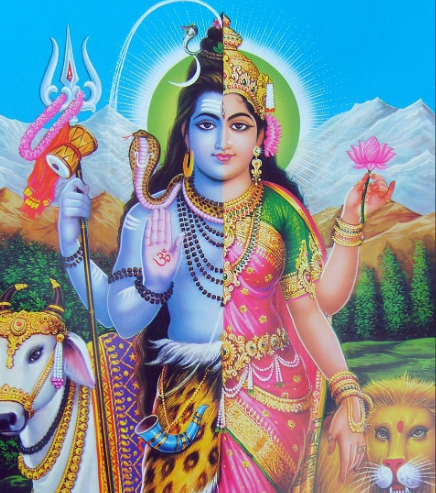
    Ardhanarishvara — the androgynous form of Shiva and Parvati.

    What began as curiosity became transformation. Through intimacy, energy work, and heightened awareness, masculine and feminine dissolved into a single current — revealing what might be called androgynous consciousness: the genderless nature of consciousness itself.

    This account reflects how I understood these experiences at the time. Some interpretations — particularly those concerning “pure consciousness” or the nature of the self — are revisited more cautiously in later posts.

    The Catalyst

    Months after my dakini left, I began a new physical relationship. It did not carry the same depth of love and joy I had experienced with her — but another kind of connection emerged: intense, surprising, and charged with something new.
    Between us, there was a third presence – a catalyst. Cannabis. What followed was not intoxication, but amplification — the body becoming a field of resonance.

    Before I continue, a few clarifications.

    I was in my sixties, and this was the first time I had ever inhaled anything of that nature. I only allowed myself to take this step because the timing was right: my professional life had reached its natural end, retirement was near, and no responsibilities demanded my vigilance.

    I do not encourage the use of any substance, and certainly not for those still engaged in daily obligations. But neither do I believe in forbidding what can, under the right circumstances, open doors of perception. There are always risks — and each person must weigh them with full awareness and responsibility.

    In my case, this plant did not serve as an escape, but as an amplifier. If before the feeling had been like a gentle stream, now it became a current — powerful, unrelenting, sweeping us both into places we had never imagined.

    At first, it seemed a fortunate synergy that simply enriched our time together. But then came a turning point.


    Acknowledgment and Cartography

    The more I explored, the clearer it became that this was no longer just pleasure. It was August 2012 when a peculiar surge rose along my spine. At that moment I understood that the “Tantric thing” we had often joked about was asking for real attention.

    So we continued the practice — hour after hour, day after day. Between encounters, in the quiet intervals, I explored my body alone, discovering how the same sensations grew stronger even without her presence.

    Mapping of perceived energy nodes during the “cartography” phase (2012–2016). Visualization created for documentation purposes.

    It became a phase of inner cartographyMapping the nodes — mapping subtle structures revealed through deepening sensation. Each new pulse illuminated hidden territories within.

    Meanwhile, I wandered the internet — half seeker, half skeptic — searching for echoes of these experiences in Tantric symbols and metaphors. I did not yet know the language, but I recognized the patterns.


    Changes in Perception

    As the sensation evolved, my perception of reality changed as well. The first noticeable shift was a sense of dissolutionOn dissolution and death — as if the boundaries of my body were no longer fixed. The faint openness I had once felt along my spine gradually expanded, as though I were merging with my partner, and through her, with everything around us.

    Following the sensation inward revealed a simple fact: thinking disrupted the experience. The feeling was strong enough to expel thought like an unwanted reflex. Without knowing it, I was practicing some sort of meditation.

    Over time, I spent longer periods fully conscious yet free of thought — until thought itself appeared as something external. That led to a fundamental realization: I was not my thoughtsOn the Self. They were merely automatic brain activity, mechanical and impersonal. What I truly was, was the awareness observing them arise and fade.


    The Reversal

    Then, in the spring of 2015, something shifted. The current that had always flowed from me to her suddenly reversed. It was as if she became the origin, and I, the receiver. Sensation moved in new directions, unfamiliar and astonishing. I received what I had only known how to offer.

    To feel oneself from the other side of the mirror is no small thing.

    At first, it was disorienting. The gender roles I had thought fixed — shaped by habit, culture, identity — dissolved. It stirred questions I had never considered.

    As we talked through it, we found parallels in ancient Tantric texts — especially in the image of the androgynous body. What had once been polarity now became androgyny — not metaphorically, but experientially. A deeper wholeness emerged, as if until then we had only known half of what was possible.


    Androgynous Consciousness – The Body Beyond Gender

    Once the initial cultural shock subsided, it felt not extraordinary but self-evident. This “I” — pure consciousness — existed beyond gender. Sex was a biological function, irrelevant in this context.

    Physically, my partner and I were woman and man. Energetically, we were identical. At first, we exchanged polarities — now one radiating, now the other. Later, we learned to hold both simultaneously: masculine and feminine, yin and yang, fused in a single moment. What remained was unity — a continuous field of awareness perceiving itself through two bodies.

    At a subsequent stage, I found I could reach this fusion aloneFusion.


  • Tantric Union — Before Words

    Traditional Yab Yum imagery — symbolic representation of unified awareness

    A personal story of how sensual connection became Tantric Union and meditation — the accidental beginning of an inner path. What began as pure feeling unfolded into a wordless communion, where love, joy, and energy merged into a single current.

    A Language Beyond Words

    I didn’t know a single word of her language, and she only knew a few of mine. But despite that—or perhaps because of it—we reached a level of communication beyond words, far deeper than anything I had ever experienced. A smile, a glance, a moan, a shiver—that was all it took to know exactly what the other was feeling. It was as if our bodies were wired together. I could feel her pleasure; she could feel mine. Her delight became my own, and mine became hers. This was how it began — without intention or philosophy, only through feeling, our encounters were the door to tantric union and the unfolding of awareness.


    At First, it Was Just Pleasureand Then Came Love

    It began as simple pleasure, without meaning or mystery, but as our connection deepened and our bodies slipped into this strange communion, something else took hold: pure joy. The first feeling when we met was sheer joy; she leapt with excitement, already anticipating what we were about to share. That joyful anticipation, that shared intention, that sense of oneness, wove itself into the ever-intensifying pleasure between us.

    …And then came love. Not the binding thing but care — the quiet kind that asks for nothing. I wiped her tears when she cried, wrapped her in my arms when sadness found her. She rubbed the pain from my back when it flared. Our spoken words were few —a narrow channel limited by vocabulary— yet our bodies said everything. A glance that lingered, a kiss that asked nothing, a breath drawn in silence, a smile resting between us—each spoke louder than words. Still, we both knew this wasn’t ordinary love.

    Our situation was captured with painful precision in a Tom Waits song, The Bird and the Whale.

    “You cannot live in the ocean,” she said. “You never can live in the sky.”
    “Please don’t cry, let me dry your eyes. Though I know that we both must part, you can live in my heart.”
    Tom Waits, The Bird and the Whale

    That was us—two beings made of different elements, unable to live in the same medium, but who, for a while, danced in the space between. And as we had known from the start—and as she had planned—after two years she returned to her country, on the other side of the world. Knowing it was what we both needed to thrive, we didn’t cling. We let go, gently and without regret.


    What Remained After She Was Gone

    When she left, something remained — not emptiness, but a quiet current that would guide the rest of my journey. Without realizing it, we had touched the three sensations that would later become essential in my practice: the pleasure of intimacy, the joy of unity, and the sweetness of unconditional love —a love that was not transactional, but something far deeper. We were just a man and a woman, sharing the precious moments we could steal, unburdened by expectations or regrets, living in a bubble isolated from the world and its everyday worries.

    Our encounters became a kind of meditation. With subtle movements and no need for words, we simply followed the contours of shared pleasure, spending hours suspended in an eternal now. I would only later learn that what we had stumbled upon resembled Tantric union — the fusion of energy, emotion, and awareness.


    From Memory to Practice

    She is gone now, but she left me two lasting gifts. One is the ability to remain on the edge of climax for as long as I choose —with any partner— which became essential for my energetic training, helping me guide and amplify the ever-deepening flow of this sensation, which I later came to know as Qi On the nature of qi.

    The other is her memory —surely softened and idealized by time— which became central to a powerful practice I discovered years later: a fusion technique known as Yidam, where a visualized deity becomes a conduit for awakening. In my practice, I visualize her as my dakini, the celestial dancer who fuses with me in the deepest embrace, in an explosion of pleasure, joy, and love —sending me into the ultimate energetic experience.