Tag: sexuality

Practices involving sexual energy and tantric dynamics

  • Pleasure as Signal: Unlearning the Religious Handicap

    This exploration did not begin as a spiritual search. It began with curiosity about a physical sensation — something very close to orgasm, appearing in meditation-like states. What I eventually discovered was that pleasure as signal, not temptation, would transform my entire approach to practice.

    A Childhood Suspicion of Pleasure

    Like many people raised in Western societies of my generation, I grew up with a religious education shaped by Judeo-Christian ideas. One of its messages was that pleasure — especially sexual pleasure — was morally suspicious.

    I later abandoned religion altogether when I discovered how closely the official church had supported a dictatorship. That experience exposed, at least for me, the political and intellectual fragility of religious authority.

    Yet even after rejecting religion, a residue remained: the unexamined assumption that pleasure and spirituality belonged to incompatible worlds.


    An Unexpected Collision

    For a long time this contradiction did not matter, because together with religion I had also discarded the very notion of spirituality. I saw it as little more than another conceptual trap.

    Then, unexpectedly, my own experience began to lead me in that direction.

    At first my exploration was driven simply by curiosity about a bodily phenomenon. The investigation was naturally encouraged by the extraordinary pleasure the sensation produced. But gradually the questions changed. My curiosity drifted toward much older questions: what am I, where do I come from, what is this experience I call myself.

    These are questions traditionally monopolized by religion, and for that reason I had always considered them irrelevant. Finding myself confronted with them again was disconcerting.


    Pleasure as Motivation

    At that stage the practice still revolved around pleasure.

    During the period of tantric union, what this meant in practical terms was that I was having extraordinary daily sexual experiences with a woman. Later, when the practice became solitary, the intensity increased even further. Sexual pleasure blended with other powerful sensations—love, joy, emotional warmth.

    From the outside it might have looked like an extremely elaborate form of masturbation.

    Which made the growing presence of spiritual curiosity even more puzzling — and, for someone carrying religious residue, vaguely suspicious.


    Pleasure as Signal, Not Temptation

    This is where I had to unlearn my conditioning.

    Instead of seeing pleasure as a distraction or a temptation to indulge, I began to view it as a physiological signal — the body indicating that the process was moving in a productive direction.

    In that sense, pleasure was not the goal of the practice. It was more like a by-product of the body reorganizing itself. A feedback mechanism, not a trap.

    This reframing was essential. Without it, I would have constantly fought against the very current carrying me forward. The religious view of pleasure as sin — something to resist, overcome, or feel guilty about — would have turned every session into an internal conflict.

    For practitioners who carry this cultural baggage, recognizing pleasure as signal may be one of the most important shifts they can make.


    The Changing Texture of Pleasure

    Another change soon became obvious.

    Experiencing overwhelming pleasure occasionally is very different from experiencing it every day. Habituation inevitably sets in. What once felt extraordinary gradually becomes familiar.

    But something deeper was also happening. The pleasurable phase of the practice seemed to contain the seeds of its own transformation.


    Obstacles and Flow

    Over time it became increasingly clear to me that the waves of pleasure appeared whenever some obstacle in the internal flow of sensation was reduced or removed.

    In the early stages everything felt blocked. Each small opening produced an intense surge of pleasure, sometimes almost orgasmic.

    Later the situation reversed. Instead of a landscape dominated by darkness with occasional points of light, it began to resemble a field of light punctuated by a few remaining dark spots—the last obstacles, gradually shrinking.

    As that happened, the peaks of pleasure became less dramatic. Not because something was lost, but because there was less resistance left to dissolve.


    From Orgasm to Bliss

    The intense orgasmic surges slowly faded. What remained was something quieter.

    No longer sexual pleasure, nor the emotional excitement of love or joy, but a softer and more continuous quality of experience—something that could perhaps be described with the word bliss.

    A gentle background presence rather than an overwhelming peak.

    Instead of explosive episodes, there was a subtle sense of permeation: the body, and even the surrounding perceptual space, seemed quietly saturated with this calm intensity.


    Conclusion

    This seems to be where the trajectory leads. The violent orgasms disappear, replaced by something softer — a bliss that diffuses through the body and the surrounding perceptual field.

    With no remaining points of tension to capture attention, the field becomes continuous, without clear boundaries or form. What once demanded attention now simply remains present, quietly permeating everything.

    At that point the discursive mind — which had been guiding the process almost automatically — finally comes to rest.

    None of this would have been accessible if I had treated pleasure as the enemy.
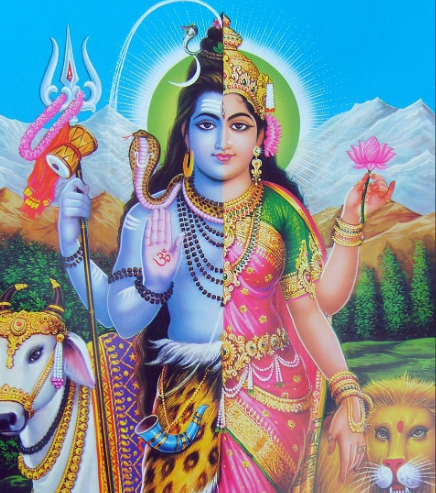


  • Androgynous Consciousness: When Masculine and Feminine Dissolve

    Ardhanarishvara — the androgynous form of Shiva and Parvati.

    What began as curiosity became transformation. Through intimacy, energy work, and heightened awareness, masculine and feminine dissolved into a single current — revealing what might be called androgynous consciousness: the genderless nature of consciousness itself.

    This account reflects how I understood these experiences at the time. Some interpretations — particularly those concerning “pure consciousness” or the nature of the self — are revisited more cautiously in later posts.

    The Catalyst

    Months after my dakini left, I began a new physical relationship. It did not carry the same depth of love and joy I had experienced with her — but another kind of connection emerged: intense, surprising, and charged with something new.
    Between us, there was a third presence – a catalyst. Cannabis. What followed was not intoxication, but amplification — the body becoming a field of resonance.

    Before I continue, a few clarifications.

    I was in my sixties, and this was the first time I had ever inhaled anything of that nature. I only allowed myself to take this step because the timing was right: my professional life had reached its natural end, retirement was near, and no responsibilities demanded my vigilance.

    I do not encourage the use of any substance, and certainly not for those still engaged in daily obligations. But neither do I believe in forbidding what can, under the right circumstances, open doors of perception. There are always risks — and each person must weigh them with full awareness and responsibility.

    In my case, this plant did not serve as an escape, but as an amplifier. If before the feeling had been like a gentle stream, now it became a current — powerful, unrelenting, sweeping us both into places we had never imagined.

    At first, it seemed a fortunate synergy that simply enriched our time together. But then came a turning point.


    Acknowledgment and Cartography

    The more I explored, the clearer it became that this was no longer just pleasure. It was August 2012 when a peculiar surge rose along my spine. At that moment I understood that the “Tantric thing” we had often joked about was asking for real attention.

    So we continued the practice — hour after hour, day after day. Between encounters, in the quiet intervals, I explored my body alone, discovering how the same sensations grew stronger even without her presence.

    Mapping of perceived energy nodes during the “cartography” phase (2012–2016). Visualization created for documentation purposes.

    It became a phase of inner cartographyMapping the nodes — mapping subtle structures revealed through deepening sensation. Each new pulse illuminated hidden territories within.

    Meanwhile, I wandered the internet — half seeker, half skeptic — searching for echoes of these experiences in Tantric symbols and metaphors. I did not yet know the language, but I recognized the patterns.


    Changes in Perception

    As the sensation evolved, my perception of reality changed as well. The first noticeable shift was a sense of dissolutionOn dissolution and death — as if the boundaries of my body were no longer fixed. The faint openness I had once felt along my spine gradually expanded, as though I were merging with my partner, and through her, with everything around us.

    Following the sensation inward revealed a simple fact: thinking disrupted the experience. The feeling was strong enough to expel thought like an unwanted reflex. Without knowing it, I was practicing some sort of meditation.

    Over time, I spent longer periods fully conscious yet free of thought — until thought itself appeared as something external. That led to a fundamental realization: I was not my thoughtsOn the Self. They were merely automatic brain activity, mechanical and impersonal. What I truly was, was the awareness observing them arise and fade.


    The Reversal

    Then, in the spring of 2015, something shifted. The current that had always flowed from me to her suddenly reversed. It was as if she became the origin, and I, the receiver. Sensation moved in new directions, unfamiliar and astonishing. I received what I had only known how to offer.

    To feel oneself from the other side of the mirror is no small thing.

    At first, it was disorienting. The gender roles I had thought fixed — shaped by habit, culture, identity — dissolved. It stirred questions I had never considered.

    As we talked through it, we found parallels in ancient Tantric texts — especially in the image of the androgynous body. What had once been polarity now became androgyny — not metaphorically, but experientially. A deeper wholeness emerged, as if until then we had only known half of what was possible.


    Androgynous Consciousness – The Body Beyond Gender

    Once the initial cultural shock subsided, it felt not extraordinary but self-evident. This “I” — pure consciousness — existed beyond gender. Sex was a biological function, irrelevant in this context.

    Physically, my partner and I were woman and man. Energetically, we were identical. At first, we exchanged polarities — now one radiating, now the other. Later, we learned to hold both simultaneously: masculine and feminine, yin and yang, fused in a single moment. What remained was unity — a continuous field of awareness perceiving itself through two bodies.

    At a subsequent stage, I found I could reach this fusion aloneFusion.


  • Tantric Union — Before Words

    Traditional Yab Yum imagery — symbolic representation of unified awareness

    A personal story of how sensual connection became Tantric Union and meditation — the accidental beginning of an inner path. What began as pure feeling unfolded into a wordless communion, where love, joy, and energy merged into a single current.

    A Language Beyond Words

    I didn’t know a single word of her language, and she only knew a few of mine. But despite that—or perhaps because of it—we reached a level of communication beyond words, far deeper than anything I had ever experienced. A smile, a glance, a moan, a shiver—that was all it took to know exactly what the other was feeling. It was as if our bodies were wired together. I could feel her pleasure; she could feel mine. Her delight became my own, and mine became hers. This was how it began — without intention or philosophy, only through feeling, our encounters were the door to tantric union and the unfolding of awareness.


    At First, it Was Just Pleasureand Then Came Love

    It began as simple pleasure, without meaning or mystery, but as our connection deepened and our bodies slipped into this strange communion, something else took hold: pure joy. The first feeling when we met was sheer joy; she leapt with excitement, already anticipating what we were about to share. That joyful anticipation, that shared intention, that sense of oneness, wove itself into the ever-intensifying pleasure between us.

    …And then came love. Not the binding thing but care — the quiet kind that asks for nothing. I wiped her tears when she cried, wrapped her in my arms when sadness found her. She rubbed the pain from my back when it flared. Our spoken words were few —a narrow channel limited by vocabulary— yet our bodies said everything. A glance that lingered, a kiss that asked nothing, a breath drawn in silence, a smile resting between us—each spoke louder than words. Still, we both knew this wasn’t ordinary love.

    Our situation was captured with painful precision in a Tom Waits song, The Bird and the Whale.

    “You cannot live in the ocean,” she said. “You never can live in the sky.”
    “Please don’t cry, let me dry your eyes. Though I know that we both must part, you can live in my heart.”
    Tom Waits, The Bird and the Whale

    That was us—two beings made of different elements, unable to live in the same medium, but who, for a while, danced in the space between. And as we had known from the start—and as she had planned—after two years she returned to her country, on the other side of the world. Knowing it was what we both needed to thrive, we didn’t cling. We let go, gently and without regret.


    What Remained After She Was Gone

    When she left, something remained — not emptiness, but a quiet current that would guide the rest of my journey. Without realizing it, we had touched the three sensations that would later become essential in my practice: the pleasure of intimacy, the joy of unity, and the sweetness of unconditional love —a love that was not transactional, but something far deeper. We were just a man and a woman, sharing the precious moments we could steal, unburdened by expectations or regrets, living in a bubble isolated from the world and its everyday worries.

    Our encounters became a kind of meditation. With subtle movements and no need for words, we simply followed the contours of shared pleasure, spending hours suspended in an eternal now. I would only later learn that what we had stumbled upon resembled Tantric union — the fusion of energy, emotion, and awareness.


    From Memory to Practice

    She is gone now, but she left me two lasting gifts. One is the ability to remain on the edge of climax for as long as I choose —with any partner— which became essential for my energetic training, helping me guide and amplify the ever-deepening flow of this sensation, which I later came to know as Qi On the nature of qi.

    The other is her memory —surely softened and idealized by time— which became central to a powerful practice I discovered years later: a fusion technique known as Yidam, where a visualized deity becomes a conduit for awakening. In my practice, I visualize her as my dakini, the celestial dancer who fuses with me in the deepest embrace, in an explosion of pleasure, joy, and love —sending me into the ultimate energetic experience.